---
title: "#237: University of Pittsburgh & Dell Technologies: Can AI Wearables Predict a Heart Attack Before It Strikes?"
description: University of Pittsburgh and Dell discuss AIoT wearables, edge AI heart monitoring, and how research-IT partnerships turn pilots into real innovation.
image: https://techtables.com/hubfs/EP%20237%20Final%20Podcast%20Cover%20Art.png
---
[Skip to content](https://techtables.com/podcast/pitt-dell-on-the-ai-wearable-that-could-catch-heart-disease-before-it-strikes#main-content)
[All posts](https://techtables.com/podcast/all)
June 24, 2026
# #237: University of Pittsburgh & Dell Technologies: Can AI Wearables Predict a Heart Attack Before It Strikes?
 Joe Toste · 27 minute read
[mailto:email@email.com](mailto:email@email.com)
### 📬 **The TechTables Newsletter**
TechTables connects public sector technology leaders — CIOs, CISOs, and CTOs — through darn good conversations and peer-driven community. The best place to start is the newsletter.
**Subscribe now.👇**
### **What We Covered**
> What if your wearable could do more than track steps — and actually help detect cardiovascular risk before symptoms appear?
>
> In this episode, Joe talks with University of Pittsburgh's Pengfei Zhou & Matt de Lima Barbosa, along with Dell Technologies' Adrienne Garber, about how AI, edge computing, and wearable devices are shaping the future of heart monitoring.
01 Why wearables are the next frontier for heart health: how real-time sensor data from everyday devices could detect cardiovascular risk before symptoms ever appear.
02 What AIoT actually means in practice: how Pengfei's research combines AI and connected sensors to build deep learning models that go far beyond step counting.
03 The role of embedded IT in research speed: how Matt's team connects faculty to secure infrastructure and technical support so researchers can move faster and focus on the science.
04 How Dell is partnering with higher ed researchers: why Adrienne's team invests in university innovation programs — and what that looks like when it reaches researchers working on real health problems.
05 Why localized AI wins on speed, privacy, and personalization: the case for keeping AI processing at the edge instead of sending sensitive health data to the cloud.
06 What the future of higher ed innovation actually requires: why the collaboration between researchers, IT, and technology partners like Dell is the ingredient most people overlook.
### **Featuring**
[Pengfei Zhou](https://www.linkedin.com/in/pfzhou/), Assistant Professor, University of Pittsburgh School of Computing and Information
[Matt de Lima Barbosa](https://www.cs.pitt.edu/people/part-time-instructors/matt-de-lima-barbosa), Director of Information Technology, University of Pittsburgh School of Computing and Information
[Adrienne Garber](https://www.linkedin.com/in/adriennegarber/), Chief Technology & Innovation Strategist, Higher Ed, Dell Technologies
### **Timestamps**
([01:00](https://www.youtube.com/watch?v=1OKbU3ohQZQ&t=60s)) Inside Pitt’s School of Computing and Information
([02:45](https://www.youtube.com/watch?v=1OKbU3ohQZQ&t=165s)) Pengfei Zhou’s teaching and research focus
([03:53](https://www.youtube.com/watch?v=1OKbU3ohQZQ&t=233s)) AIoT, wearables, and heart monitoring
([07:04](https://www.youtube.com/watch?v=1OKbU3ohQZQ&t=424s)) How Dell’s higher ed innovation pilot reached Pitt
([10:41](https://www.youtube.com/watch?v=1OKbU3ohQZQ&t=641s)) Why localized AI matters for health data
([12:18](https://www.youtube.com/watch?v=1OKbU3ohQZQ&t=738s)) How embedded IT helps researchers move faster
([13:41](https://www.youtube.com/watch?v=1OKbU3ohQZQ&t=821s)) Dell’s role as connective tissue between researchers and IT
([18:18](https://www.youtube.com/watch?v=1OKbU3ohQZQ&t=1098s)) Combining PPG and ECG signals for better blood pressure monitoring
([21:00](https://www.youtube.com/watch?v=1OKbU3ohQZQ&t=1260s)) The “Who Not How” Moment: Helping researchers move faster
([25:12](https://www.youtube.com/watch?v=1OKbU3ohQZQ&t=1512s)) AI, deep learning, and solving real problems
### Whenever you’re ready, there are 3 ways you can connect with TechTables:
#### **1. 📬 The TechTables Newsletter**
Thanks for reading TechTables! Get early access to new episodes, insights, upcoming events, and more — straight to your inbox.
#### Join now: [https://www.techtables.com/](https://www.techtables.com/)
#### 2. 🤝 Are you a local government CIO who wants to become a better leader?
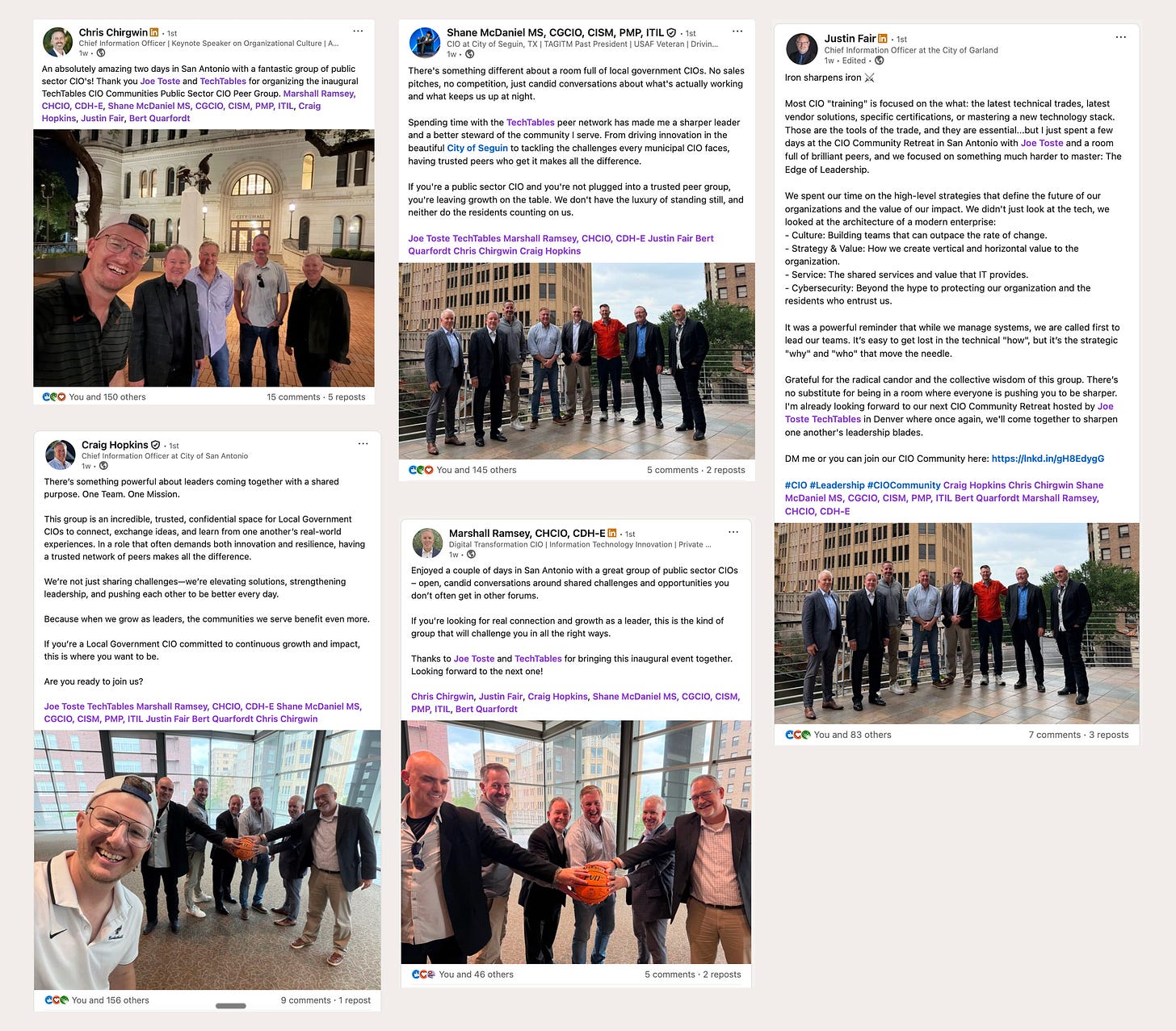
Check out our high-trust, vendor-free peer group built for local government CIOs tackling real challenges, honest conversations, and an authentic desire to become a better leader — our next retreat is November 2026!
Learn more → [https://techtables.com/communities-local-government](https://techtables.com/communities-local-government)
### 🤝 The Better Together Series (Virtual & On-Site)
The narrative-driven series bringing together industry partners and public sector CXOs. Discover the compelling stories that unfold when we stop working in silos and start building together.
»»» Email [joe@techtables.com](mailto:joe@techtables.com) to learn more.
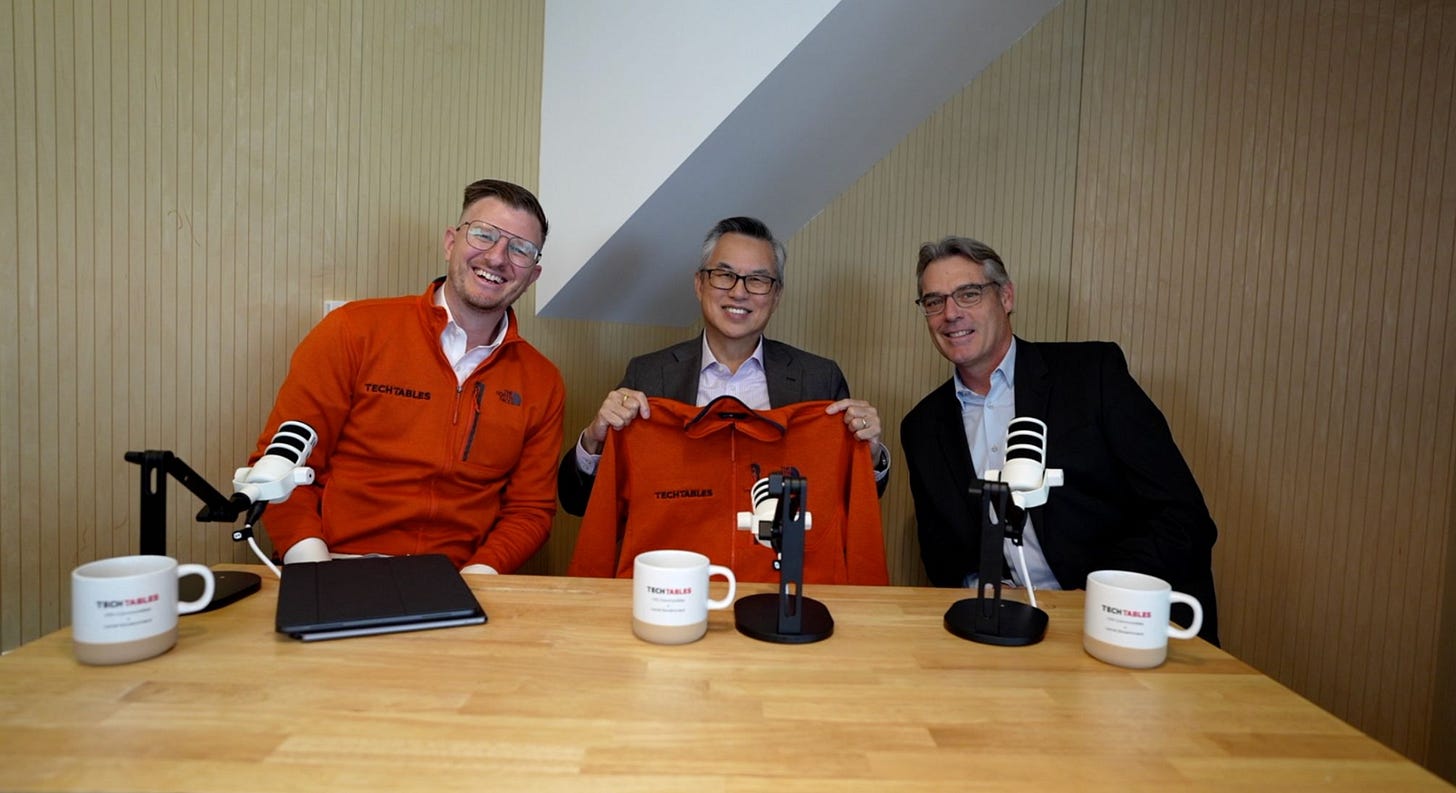
> TechTables Better Together On-Site with Peter Loo, CIO, LA County & Hannes Scheidegger, Chief Global Delivery Officer at Info-Tech Research Group
### Platinum Newsletter Sponsor:

##### —\> [Click here to see all ITRG episodes](https://techtables.com/podcast/tag/info-tech-research-group)
#### **#238: 40 CIOs. 40 Different Missions. How LA County's CIO Holds IT Together — with Info-Tech Research Group**
##### —\> **Releasing on 6/25**
#### **#236: How Nevada Recovered from a Statewide Cyber Attack in 28 Days (And What Every CIO & CISO Should Do Before It Happens to Them)**
##### —\> [Click here](https://techtables.com/podcast/236-how-nevada-recovered-from-a-statewide-cyber-attack-in-28-days-and-what-every-cio-ciso-should-do-before-it-happens-to-them)
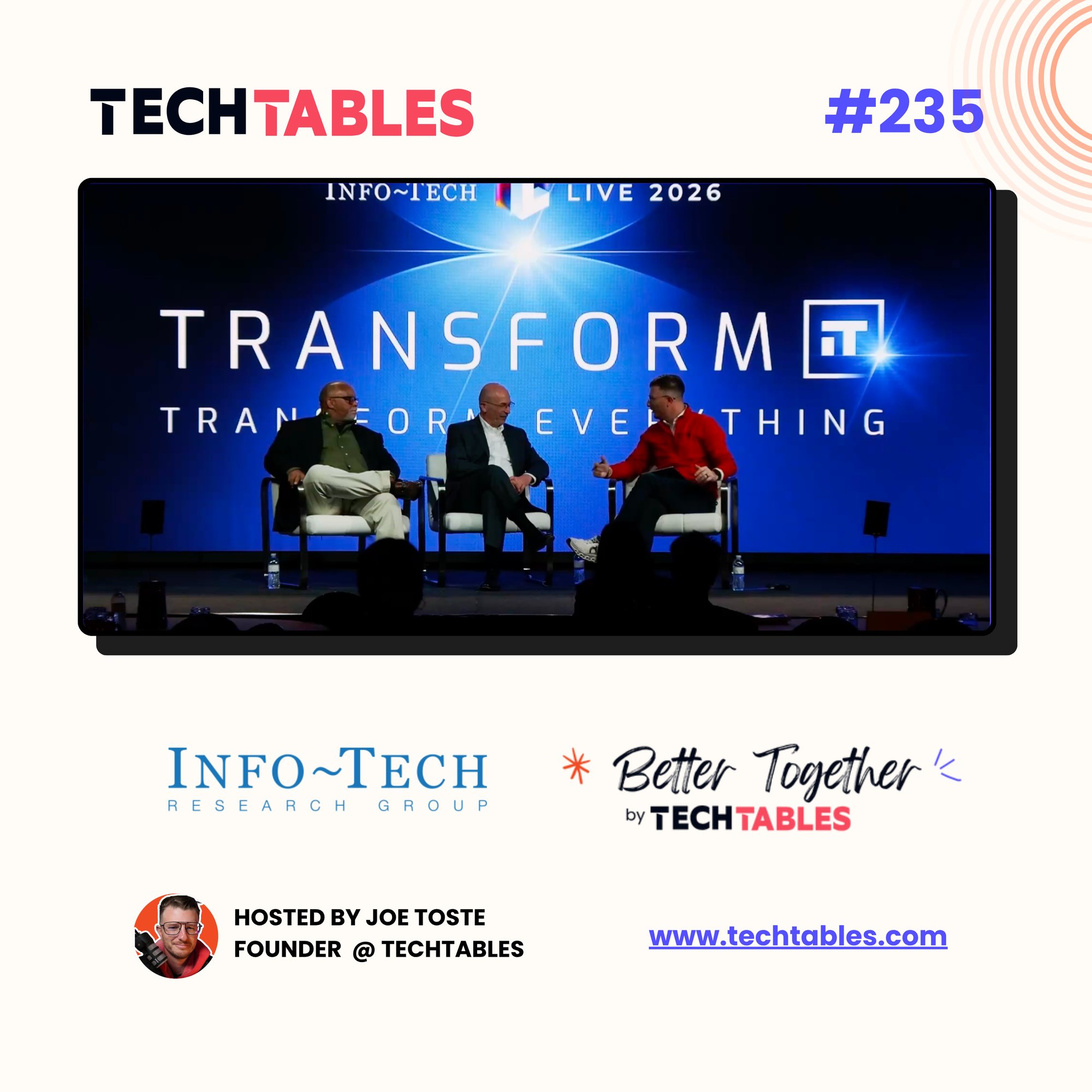
#### **#235: The Edu-pocalypse Is Here - What Higher Ed CIOs Need to Do Now | Info-Tech LIVE NOLA |**
##### —\> [Click here](https://techtables.com/podcast/235-the-edu-pocalypse-is-here-what-higher-ed-cios-need-to-do-now)
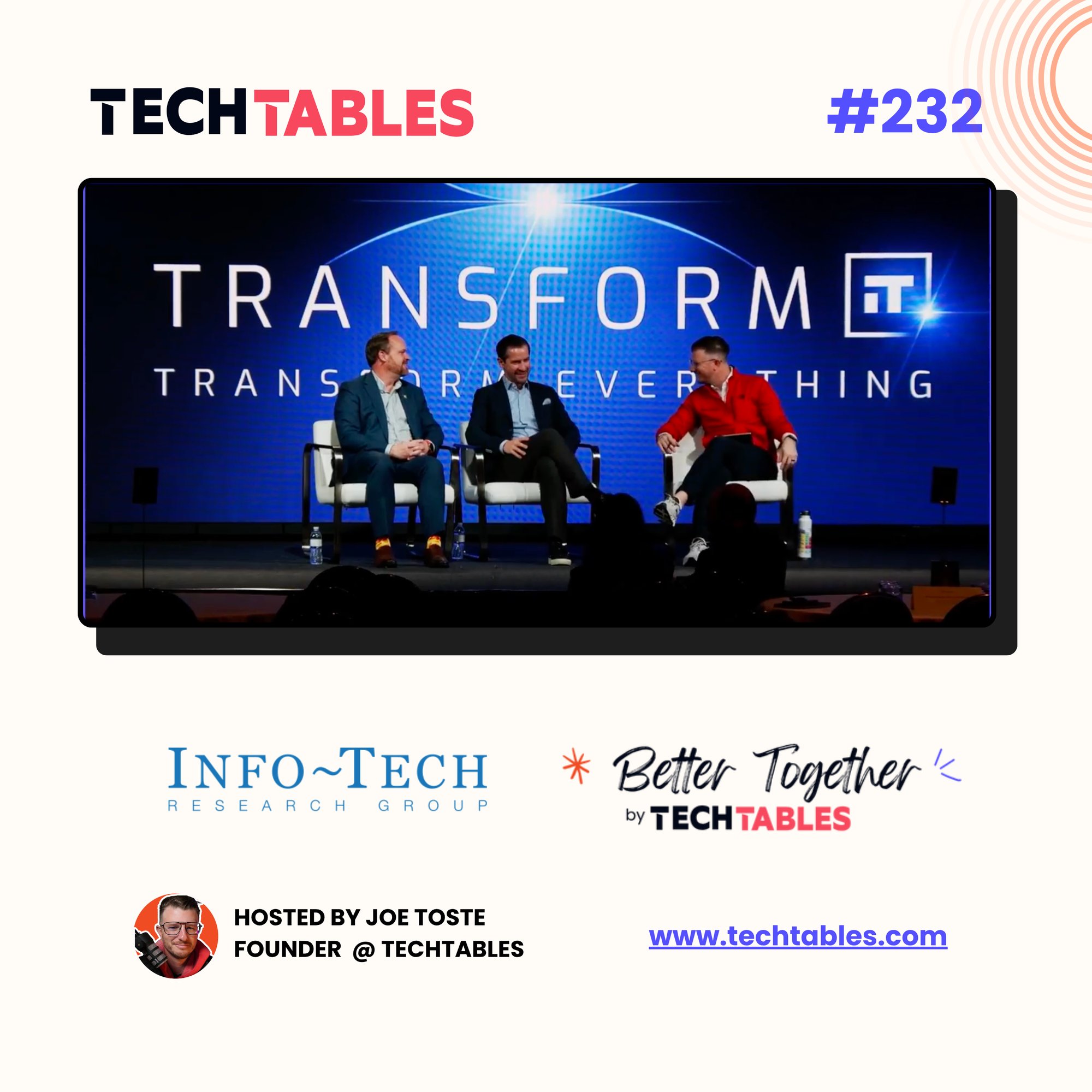
#### **#232: The CIO Who Doesn't Adapt Gets Demoted | Info-Tech LIVE NOLA | Tom Zehren & John Burris**
##### —\> [Click here](https://techtables.com/podcast/232-the-cio-who-doesnt-adapt-gets-demoted-info-tech-live-nola-tom-zehren-and-john-burris)
### Gold Newsletter Sponsor:
****
> **[SentinelOne](https://assets.sentinelone.com/ghe/sentinelone-empowers)**—Learn how SentinelOne empowers this state to stay secure.
>
> **[Verizon Frontline](https://www.verizon.com/business/solutions/public-sector/public-safety/)**[—](https://www.verizon.com/business/solutions/public-sector/public-safety/)The advanced network that keeps first responders connected when it matters most.
>
> **[Carahsoft](https://www.carahsoft.com/)**—The Trusted Public Sector IT Solutions Provider™, supports government agencies and education/healthcare markets. Contact your Carahsoft rep today to access special discount pricing exclusively through the TechTables + Carahsoft partnership!
### **Transcript**
\[00:00:00\] Joe Toste: Welcome to the Public Sector Show by TechTables. Super excited to have everyone on, 'cause we've got Adrienne Garber coming back. And we'll kick it off with Pengfei. Why don't you give us a short intro?
\[00:00:10\] Pengfei Zhou: Hi. Very excited to be here today, and I'm assistant professor in the University of Pittsburgh School of Computing and Information. I I'm doing some research on cardiovascular monitoring for everyday life, and I'm excited to do this, and I envisioned that we can have a tailored device and tailored platform for everybody to monitor their health and to provide to prevent any heart attack risk in the future.
\[00:00:37\] Joe Toste: Matt, do you wanna give us a quick intro?
\[00:00:39\] Matt de Lima Barbosa: Sure. Thanks for having us here.
Hi, I'm Matt de Lima Barbosa. I'm Director of Information Technology at the University of Pittsburgh School of Computing Information. I am a young father of a three-year-old and a 22 days old daughter, and I'm very happy to be here.
Thanks for inviting me.
\[00:00:56\] Joe Toste: Super excited to have you here. And always \[00:01:00\] love highlighting higher education and so Matt, let's continue with you. Just give us the 30,000-foot overview what does it look like for other viewers who are listening in?
\[00:01:09\] Matt de Lima Barbosa: The School of Computer Information has currently about 2,200 students and about 120 individuals between faculty and staff. We do research in several areas, most in-- One of the field of top areas here would be biomedical and clinicals research, education technologies, public sector, smart buildings, cities and transportation, sustainability.
The research here comes from several different agencies like NSF, Google, Microsoft, NASA, DARPA, NIH just to name a few.
\[00:01:43\] Joe Toste: That's great. So now bridging to Pengfei yeah, let-- t-tell us a little bit more about what you're working on within the school.
\[00:01:51\] Pengfei Zhou: So first of all, I'm a professor.
So in the school, I, as a professor, I do everything a professor does, right? And I \[00:02:00\] do research, teaching, and some service, I would call it a service, basically some activities within the school or department or within the university. So for example, you have organizing a workshop or you host a committee for the students, for specific students, for example, award student, we have some scholarship and something like that.
And my... I love the life here. It's very it's, it is amazing here I would say. And we have amazing team in the research a-and in the administrative work. Yeah, I love it working here, especially with very nice colleagues in here.
\[00:02:36\] Joe Toste: That's great. Let's dive into the research. So also, why don't you tell people what you typically teach and then also what are you doing on the research side?
\[00:02:45\] Pengfei Zhou: All right. Yeah. My teaching and research, I would say they are very co-related in the topics. I-- right now I teach two courses. One is algorithm design, teach your students how to do, design your algorithm for a specific problem, \[00:03:00\] how to do it fast and efficient. And the other course I'm teaching now is applied deep learning, and how do you apply your the very fast developing deep learning technologies and models into your real problems.
And also in the research part, I'm also using this kind of deep learning or we call it AI. People are now referring deep learning as AI. Basically, they are two different terms actually. Using these deep learning models to solve real-world problems, especially the problem that help people every day.
It's for example, the the major project I'm doing is a sense or we call it use a term called artificial intelligence of things. I want to make everything intelligent that is powered by AI. So in that case, then you can enable a lot of different applications, right? That's my like overall or the long-term research objective in my career.
\[00:03:53\] Joe Toste: So now let's go a little bit deeper into the wearables, AI. I have an Apple Watch \[00:04:00\] charging over there. 'Cause when I'm s- when I'm sitting, there's not really a use for me to really use it. So it's just charging. Yeah, tell us a little bit more about the research that, you're really trying to save lives, right?
\[00:04:10\] Pengfei Zhou: Yeah, I try, I'm trying to. I hope I can succeed. Yeah, and okay, let's I'm let's discuss something about the the project I'm doing right now. It's a heart monitoring project. I want to start from the scratch why we did this from the very beginning. And, right now, people-- do you know what is the most deadly disease right now?
Some people may think of cancer, right? But t-turns out it's not. The heart disease are number one killers across the world. For example, in last year, if I remember correctly, that 20 million people would die from heart disease. And in the US, it's about 300,000. That is more than the people dead from cancer.
And also it turns out that the heart disease, the reason they most people have this problem, the high fatality rate is because it's happening silent, silently \[00:05:00\] every day. So when you have the heart problem, you have this... When you feel it, it's mo-most of the time it's too late. And we want to do this because we can help with some wearables.
And we-- The sensors can detect what is your heart is doing now, and is doing correctly. Is any slightly degradation of the performance of the heart activity. These can be monitored, but people would just... Because there's no symptom for most of the time, so it's very hard for us to notice, oh, there's a change there.
There's something happening there. And and turns out where the wearables the mobile devices can help. It's a perfect fit for this scenario. That's the primary reason we jump into the-- this area and start doing something we believe is important. And from then we start from very basic basic things and move to the future.
We would envision that we want this build a platform for everybody running on your mobile device and connecting data using sensors every day, \[00:06:00\] and then monitor what the heart is doing now and give you some feedback, give you some warning, give you some analysis if, hey, is-- there's a high risk.
We believe there's a high risk, you need to see some doctor, something like that.
\[00:06:11\] Joe Toste: That's great. I actually knew that was number one, that heart disease was number one be- only because my brother is actually a spinal surgeon, super random, but... And there was a book that was going around called "Outlive: The Science and Art of Longevity," and they talk about the four horsemen of disease.
Number one was heart disease. So it's, it was pretty fascinating. Highly recommend the book if you wanna live longer. And I'm even-- I'm like almost entirely on a plant-based diet. Pengfei okay, so heart disease, number one. We've got wearables and AI calling it AIoT. Did I get that right? AIoT? Yes. Perfectly. Perfect. Adrienne, I'd love to get your perspective on how Dell is partnering with Pitt and other universities to really help accelerate and \[00:07:00\] amplify and drive the missions forward, in this case, on the AIoT front.
\[00:07:04\] Adrienne Garber: Hi everybody. My name is Adrienne Garber. I'm the chief technology and innovation strategist for higher education at Dell Technologies. I am part of our public sector strategy group.
In this project, the genesis of it, which is why it dovetails to your question, Joe, is it was an initiative from our higher education strategy team to create a GB10 acceleration pilot program with our higher education CIO advisory board. So we run a board, there's about 30 CIOs from across the United States and Canada that meet with us on a quarterly basis, and we have presentations and subject matter experts come in and run feedback sessions.
And part of the feedback that they gave us was they really wanted to spend some time with us discussing new and novel things, whether it was a piece of hardware that was coming out, whether it was a new model or a new platform. And in order to do that, we had to get devices into their hands. And so through that CIO advisory board, \[00:08:00\] Mark Henderson, who's the CIO of University of Pittsburgh was able to help direct us to Pengfei's research group through Matt and Adam and others on the IT team.
So we said, "You know your audience and your research teams and your PIs better than we do. Here's the device, here's how we think they might use it. Here's some, some early guidelines and constraints," along with NVIDIA, who's partnered with us on this project. And then through the IT department, they were helping us determine what were the best use cases and opportunities to try this new and experimental thing.
So that's how we found Pengfei. Personally, like how you have a personal anecdote, m-my mother has been a heart patient for the last three decades of my life. So because of that when I heard about the cross, multimodal approach of, it's wearable technology, it's for heart patients, it's medical records, it's, real-time live data processing using a device that's, localized, that's how the GB10 works.
I thought this is one of those sweet spots where all things have collaborated together to be, \[00:09:00\] maybe new lessons learned for other researchers." And, shout out to UPMC. I really appreciate the Pitt-UPMC partnership. In Pittsburgh, it's very important. Healthcare is, one of the major industries in the city.
So seeing a use case where a new technology from Dell is partnered with research that's connected to healthcare I don't think we could have picked something better for us to spend our acceleration pilot time on.
\[00:09:22\] Joe Toste: That was fantastic. So Pengfei, I'd love to get, I'd love to get the, here we are in 2026.
Wh- where do you see this going, right? In the next, let's call it maybe six to 18 months, like where do you wanna take this?
\[00:09:36\] Pengfei Zhou: All right. My envision is that with the development of AI as well as the platform, with the hard- hardware platform, I e- envision that in the-- within next five years, about six, 60 months, we will have an initial platform we are trying to build today.
But research is like there are so many uncertainties ahead, But I would \[00:10:00\] say the thing is that we can definitely build a platform to monitor that. And we want to push a boundary as much as we can, meaning we want to make as more how we say, accurate as we can, more adaptive as we can.
But I'm not sure where how much we can get it, but definitely we can have, for example as just Adrienne just said, we are gathering, putting everything together, multi-modal tech putting everything together. Real-time sensor data, your medical record, your personal information, all these things together.
So we are confident that within the next three to five years, we will have that platform running on your mobile phone. That's great. Can you
\[00:10:41\] Joe Toste: talk about the benefits of localization of this, right? There's a lot of health data, there's a lot of privacy data.
\[00:10:47\] Pengfei Zhou: Yes.
\[00:10:48\] Joe Toste: Storing that in the cloud can be risky.
Can you talk about the benefits of having the device on-site?
\[00:10:55\] Pengfei Zhou: I would say there are two major benefits, and I would s-- maybe privacy, \[00:11:00\] if you include privacy, there'll be a third one. The first pri-- benefit is that you don't need to get to the cloud to run your model, which is very important.
People think that connecting cloud is a, okay, you just pay the money, put everything there, you're safe, right? But actually it's not because especially for this like time-sensitive application. What if the, this network is, has a problem? What if the data has something wrong with there? And if, and the cloud is handling so much data at the same time, then you-- it's very hard for them to tailor your data and put data into your application.
And we, if you host the data, do it locally, it's fast, very efficient, and also the most importantly, it's personalized. It's running only for you and running based on your data. And this is a kind of, And we try to build a, like a foundation for them which is like some, put some common knowledge and build a foundation of the application.
And then you put your data into it and run it on your edge device which is perfect for your, for this \[00:12:00\] application. I would say first one is time sensitive and the other one is accuracy. And if you include privacy, that's another part. But m-most of the time we don't for, at this stage, we don't consider much as privacy problem right now.
We want to build the model and make the model as accurate as we can at this stage. Yeah.
\[00:12:18\] Joe Toste: Matt, can you talk about how you help researchers like Pengfei really getting the devices into their hands, collaborating across the departments? I think it would be a great-- It'd be great to hear from you just on the collaboration front between IT and on the research side.
\[00:12:35\] Matt de Lima Barbosa: Being embedded within the school where, research is being done really make things-- changes the whole dynamics for us here. So instead of hiding behind a ticket system or, several administrative processes, faculty can walk up to our office and ask for help. We will find each other in the hallway, and we can discuss ideas.
So our goal here is really to \[00:13:00\] remove any obstacle. We try to be, as to be very speedy when we're trying to help. And really, we really see each each other like we really see ourselves as partners when it comes to research. So we're here to work with with the school, with the faculty to get things done to, promote innovation within the school.
And we're also here to connect our faculty with the larger uni- environment at the university. We are-- Our team is really good at navigating that, where we-- that's what we do on a daily basis. So that way, the faculty, the researchers, they don't need to spend time on these other things.
We do that for them so then, they can spend their time doing what matters the most for everybody
\[00:13:41\] Joe Toste: That's great. Now, Adrienne, you're gonna bring it all together because now you're gonna tell us how Dell partners with both the researchers and on the IT side
\[00:13:49\] Adrienne Garber: I think our power is that connective tissue between the two groups. I think sometimes it's seen as IT, central IT sitting on one t- side and \[00:14:00\] university innovation and where the PIs are living in different labs and institutes and centers are on the other end of the spectrum, and you put Dell in the middle.
To me, I actually think it's a triangle. It's like at any given time, we might be more directly connected to troubleshooting individual meetings with PIs like Pengfei, with Dell and NVIDIA giving us direct feedback about what models he's using, what frameworks he's approached, what challenges has he hit with, and what obstacles there might be if he's tried something different that's outside of the scope and guidelines, and so it gives us a chance to revise our documentation.
Talking about opportunities for skill building, like maybe there's, professional development programs that we have that his researchers or his postdocs might want to take advantage of. So that could be a direct. And then also with IT, talking about governance and policymaking and budgets and, funding constraints.
And so I think at any given time, all three of us in that triangle have a very balanced relationship. It's just in different phases of research development, you \[00:15:00\] might be-- the vendor like Dell might be more in tune with direct feedback loop with the researcher versus the times that we're looking at governance and a systemic approach and looking for additional pilots, going back and adding new technology.
So I know for University of Pittsburgh, we've actually deployed extra GB10 devices to the university because of the work that Pengfei is doing and having other labs be involved and other research centers and institutes. So I think that the whole idea about bringing it all together, it's balancing the financial constraints, the governance constraints, like the things that you don't want to stymie innovation, but they are mandates from the university, and there are rules and regulations that need to be followed.
And so as a vendor, like we're very much, in line with the things that Matt's team needs in order for projects to move forward. But at the same time, balancing Pengfei's group, his research team of, "Here's the innovation, here's us pushing the technology, here's ways that we are \[00:16:00\] envisioning use cases that you haven't considered, vendor."
And so I think that's the exciting piece is making sure the experimentation is happening in an environment that's still safe and protected.
\[00:16:10\] Joe Toste: So Adrienne's probably gonna laugh at me, but I am gonna correct her on the podcast, 'cause hey I got the podcast.
\[00:16:16\] Adrienne Garber: It's your podcast, so your name's on, you're allowed to do what you want.
You're
\[00:16:17\] Joe Toste: right, it's my podcast. So you kept refer- you keep... You kept referring to yourself as a vendor, but having spent some time with Adrienne, I would put her in the partner bucket. I'm gonna just put you in the partner bucket. So a vendor- I feel like
\[00:16:30\] Adrienne Garber: I just got upgraded. I'll take it.
\[00:16:31\] Joe Toste: Yeah. You got upgraded, yeah.
Vendor, they just wanna sell you something. Partner, you're listening to use cases, you're taking feedback, you're working the triangle, right? As you put it.
\[00:16:42\] Adrienne Garber: Yeah. Pittsburgh's built on a triangle, so it's in my mind, w- Pittsburgh is a triangle, the three rivers.
\[00:16:47\] Joe Toste: Oh, yes. It's all coming full circle.
Pengfei, I'd love to hear more about the research team. You're clearly not doing everything, right? Tell us a little bit more about the team and how it's helping you to push forward the \[00:17:00\] mission
\[00:17:00\] Pengfei Zhou: yeah as you mentioned, I'm not doing this by myself. It's not possible. This is a collaborative research project across three departments in the University of Pittsburgh. And I'm the PI in the School of Computing Information, and I have a collaborator, Wei Gao, from Electrical Computer Engineering department.
And we also have a collaborator from the medical school which is cardiovascular professional. He's So we are doing this together to do that. And so for all of us, and I'm more focusing on the technical part, how to develop models, how to de-deal with the data. And the team the group team in the EC department, they are more focused on how to how to do this computation on your d- on your device, how to make it efficient, something like, because the model efficient will eventually run on your mobile device, and the mobile device is battery powered, so you want to make it efficient.
And the other one the medical school, the team is doing the you recruit patients, collect data, and provide very \[00:18:00\] professional knowledge and guidance, how should we do it, which part is important, something like that. So it's very be- unique medical domain knowledge. This is our big team, and for on my small team, on my small team, we I have three PhD students working with me and and they are doing great job, can you describe just a little bit more about maybe some of the specific use cases that they are working on too? Yeah. I can start with the first problem we tried to solve. For example, the right now the data problem, right now the the heart monitoring is not a new topic. It's people are doing it for many years.
And for example, people are monitoring the blood pressure. And as I discussed before, the, this kind of heart disease happen silently all the time. So if you put more effort to monitor it, to track the status, you will be more conscious or you'll be know when should you see a doctor.
And but even the monitoring the heart blood pressure is not a, \[00:19:00\] not something people like do every day. For example, we-- I don't do it every day, and I don't believe most people do it. But it turns out people are having it long before they really realize it has happened. And it's because when you are doing a...
the blood pressure, basically you have to wear a cuff and a pump, pump some g- gas, into it and release it, and you have a mirror on it, right? So this is a problem. Say, can you do that to... Theoretically, yes, you can do that every day, but people won't do that. It's too troublesome. And so then we want to build something can sense your heart blood pressure continuously.
You don't need any intervention into it. So then we had tried to build some sensor data from it. And right now the sensor data is the, the-- then the problems becomes the accuracy problem. If some of the sensor data is easy to get, but it's not no accuracy. But some of them, for example, you attach some tablets on your body.
You measure the electricity running through your heart, which is called electrocardiography. \[00:20:00\] It's called ECG. And but that kind of sees is also a problem because you can't do that every day. You wear the tabs every day. So then the technical problem becomes, can we somehow combine the two to get it down, right?
To get a cheaper sensor, which we call PPG, basically it's a it's a light signal from your body. We reflect, shine a light on your vessel and get a reflection on that. We measure that. But this is continuous. You don't need to do anything, just wearable, wear a mobile device. Like you have a Apple Watch, you probably have that too.
So you measure the signal, and we try to use that signal to generate the electric signal at the same time and then combine the two to measure your blood pressure. So and we did a very good job and get very amazing results right now That's all some is, a little de-detail but I always say is that a kind of data problem, how do you get generate different the modality of it and get things there.
\[00:20:52\] Joe Toste: Yeah, no, that's great. So Matt, I wanted to jump back to you. So Pengfei, he's got a lot going on. We've got multiple \[00:21:00\] researchers. I'd like to hear more about, the cross-functional collaboration, which I think is really underrated. I think it's easy to say that and much harder to do especially at the university level.
And Adrienne hinted on it earlier, everything from governance to, When you think about researchers, I was talking about UC Santa Barbara, UCSB before this, and you c- it-- you can't just hand a researcher a laptop or any device and go, "All right. Do whatever you want." There needs to be some...
Can you just maybe talk about the collaboration of how the two of you get on the same page, or the two departments get on the same page between research and IT?
\[00:21:38\] Matt de Lima Barbosa: Sure. We begin by actually taking advantage of the whole infrastructure, larger IT infrastructure that the university provides to us.
Okay, so we have Pitt Digital here who will take care of making sure that the environment is secure, that we have firewalls, that, that network is fast and is accessible to \[00:22:00\] everybody. So this is the larger IT here within the university, and they do a very-- Like, if you see the size of their operations, it's a jaw-dropping kind of thing.
My team here will then make the bridge between, the larger with the local. And that's the part that the researcher gets to work with us, not only, in one project, but over the years they're gonna be working with us. And sometimes there are cases that because we work with basically the like all the researchers here in, within the school, we ha- we-- my team will have maybe we'll have information that, we learned from working with some other PI and that can help with, Pengfei's research.
Not only that, we we are in really close contact with the university, like with Pitt Digital here, so we know what, what they can offer. We, sometimes-- Because not, it's not always the case that we should, do things locally here right? We have our Center for Research and Computing and \[00:23:00\] Data that, that has, much more is be- way better tooling than, a local IT our local IT department will have.
But, having, being in possession of this information is what allow us to, help to aid the PI to make better decisions to also support them. We, the other day, we had here a PhD student who was looking for a, an LLM model, and it turned out that he had spent a l- already like about a week looking for something that would fit his research, his thesis.
And it turned out that we had w-worked with Ollama for creating an environment for a course where we were teaching here in the school. It was the matter of simply him like walking up to my door, and I was like, "Have you tried this?" And he said, " Oh, actually, no, I'll give this a try." And it was a couple of days later, he came back saying "Oh, thank you so much.
That was exactly what I needed." So this is how, yeah, being we have this really close, being in, in close proximity even with with- With the PIs here within the \[00:24:00\] school we know each other. This relationship with Evolve with them like is in my opinion, priceless. And it's hard, very hard or, impractical to replicate at a larger scale.
So that's why we're very suc-successful in collaborating with the PIs here
\[00:24:13\] Joe Toste: Yeah, that's gotta be a lot of fun. It's interesting too, I-- there's a book called, you don't even have to read it, the title says everything. " Who Not How," right? I think a lot of times we spend a lot of time like, "Hey, how am I gonna do this?" And a week goes by and you're like, "I don't know." And then finally you ask somebody, and they then become my who.
They figure it out, right? So I love that. So as we start to turn the corner towards wrapping up the podcast in the next 10 or so minutes, there's a lot of technology going on. There's a lot of innovation. It's a fun time to be alive. I mainly use-- And when I say AI, I'm mainly referring to generative AI for myself, but I also realize that there are lots of different types out there.
We-- You mentioned earlier, Pengfei you said deep learning, right? That's another one. I think even too, I think it's, early on \[00:25:00\] and still a lot of people confuse machine learning with AI. But I was really curious around where are you going to you know, find new information? What research are you reading?
What articles are you reading?
\[00:25:12\] Pengfei Zhou: I will-- let's have a brief... I have a little bit discussion on the AI part. So AI is a, is is the f- the full name is artificial intelligence. So it's a very subjective word, right?
It's not a strictly defined what is AI, but it's a, the way we interpret the real world, right? The traditional machine learning the... I always say the AI today, people take for granted the AI is referring to deep learning. Deep learning is a way to realize AI, basically, right?
The deep learning basically means we have a very complicated structure of network new networks of model, and then we learn the knowledge from the real world data and using this model to generate something we call like artificial intelligence. That's basically my understanding of it. So \[00:26:00\] maybe in the future we don't use deep learning to do AI.
We use some other magical thing magical tool to do that. Maybe that's possible in the future. But right now, everything like works amazing is built with deep learning. All right. And also use a synthetic structure from your human brain because your brain works like the structure of your brain, neurons in your brain is connected in a similar way.
And we mimic that structure u-in deep learning, right? That's my understanding. And the other thing is about the craft the problem. Always craft and tackle, look into different problem thing here. I read everything, basically. I like to read. I like read articles. I read research papers. I watch videos.
I watch... Basically, I like read everything. I don't specifically rely on on research papers to find my next research topic. But they although I read different things, they serve a different purpose. And basically, I find problems by reading newspapers, watch, watching videos, and talk to people, es-especially talk to people in different \[00:27:00\] domain, which is very helpful to find a real problem.
Just like how do how we did-- decided to tackle the problem in the cardiovascular disease domain. And once I have the problem, then I will refer to the research papers and what I have done before or models we have the, in from research papers and then solve the problem. So it's ki- it's a different stage.
Find the problems across a broader domain and tackle the problem in your specific knowledge using a specific technology. Yes, how we do things and I believe I always say my research is pr- like application-oriented and in some case problem-oriented. So I try to solve problem, not to make a problem, just yeah, that's my my understanding of it.
\[00:27:43\] Joe Toste: That was the end piece of that was really great, right? A lot of times we either imagine a problem or we wanna make up a problem, but like actually solving a real problem, a lot more difficult.
\[00:27:54\] Pengfei Zhou: Yes, and because real problem's hard to solve, to be honest. It's really hard. But although it's \[00:28:00\] hard, we're trying to if it is worth make worth doing, even if you just make a dent on it, right?
It's because a real problem.
\[00:28:08\] Joe Toste: Okay, so I love that you said just make a dent because AI has been around for a while, right? Yeah. To go through the history, and everyone's been making a dent on it, right? As we wrap this up there's gonna be a great conference, PEARC the Practice and Experience in Advanced Research and Computing in Minneapolis I think it's next month. So it's coming up fast. I always love conferences. I think that's a great way to generate serendipity.
Dell's gonna be there. I think Pitt's gonna have a booth there. As we round out the podcast, when you go to conferences like this Matt, you're coming from the IT side, Pengfei, you're coming from the research side.
What are you looking to grab? Is it new information? Is it connection? Are you trying to figure out what other colleagues are doing at other universities? And then Adrienne, same thing for you. What are you looking for? And Matt we'll kick off with you and then we'll take it, we'll take it home
\[00:28:59\] Matt de Lima Barbosa: \[00:29:00\] We're, trying to collect like new trends and, bring innovation home. But also to capture more subtle, things like maybe the general perception sentiment about things. I think it-- you can get a lot of this kind of events without just obs- observing what's on the surface, all the, behind, not looking into just like the data the flashy PowerPoints, but also what are actually people talking about when, they leave the, the presentation?
This kind of thing is really what in- interests me the most.
\[00:29:34\] Joe Toste: Pengfei what conferences-- wh- when you go to a conference what are you looking to learn or glean from there?
\[00:29:39\] Pengfei Zhou: I was-- I went to two different kind of conferences. And normally I went to a academia conference, right? We there's a presentation about new technology and new research part.
For that kind of conference, basically what I do is that, okay because although I'm working in this area, AIoT area, but that AI is We have so many different topics and different technology in there. I don't know \[00:30:00\] everything. So I just want to show how people play with it. For example, how do you play-- You have large language model, which is very big, and you have a small model running on your mobile device.
And now is there a way, for example, to combine the two? Basically is I want to see how people play with it with these technologies. And the other part is different kind of conferences that is a showcase what I, the, is a broader community in industry different departments or maybe some government or a research part.
That-- For that part, I was most of the time I was learning what are the real problems there, and talk to them to gather some details. I believe details is a key. When you see the detail, then you know, okay from... You see the problem, it's a big problem, it's a problem. But from my perspective, I want to solve, somehow solve the problem or at least push forward the problem a little bit using technology.
Then you get to the details and the-- When you see the details, basically you can tell, okay, whether I can do it
\[00:30:59\] Joe Toste: Adrienne as \[00:31:00\] you close this out, when you go to conferences, what are you looking for, whether it's at EDUCAUSE or more of an academic conference, what are you looking to glean?
\[00:31:07\] Adrienne Garber: To answer that question, I have to call Matt and Pengfei out a little bit because a lot of researchers and departments come to conferences looking for funding.
So yes, you're looking for ideas, yes, you're looking to test your own and to showcase things, but that's s-some of why I think we're there in person is to build a human connection with our customers because it's very difficult, especially in these budget-constrained environments, to f- to know who are your partners, where might I go, who has resources.
And so if you could strike up a conversation because the person sitting next to you and watching that presenter has like-minded interests as you it reduces some of those barriers to get to very sensitive topics like I'm looking for XYZ resources, whether it's building human capacity, like you're building out a team and you're looking maybe for engineers from a partner like Dell to come on \[00:32:00\] site and be involved, like physically in a location with you, because that is something we do.
We do that through our office of the CTO, where we have embedded engineers on projects like shoulder to shoulder doing co-research creation together, intellectual property development together. Or it might be that you're looking for physical resources, like you need devices or hardware or software licenses, and so coming into a space where you have a lot of different technology vendors and partners there and asking them about the affordances of one solution to another, and you can compare them.
Literally, they're next to each other, so you can really have some very deep conversations, very deep technical conversations. And then the thing I like, and it's the most fun in my job, and it's where this acceleration pilot generated from, is there aren't as many feedback lo- back loops as I wish we had.
And so we have advisory boards and steering committees, and we participate with our higher ed customers on those where we're there on campus or meeting on a regular cadence to talk about these very challenging issues and technology developments and \[00:33:00\] experimental ideas. Or it's vice versa, where we want you, partnered with us and spending time with us.
And so a conference gives a lot of foray into the army of the willing, who would like to be on these boards or these committees or these steering groups, and what might our work product look like, and how can we create a community of practice together? My background is in academics. I spent 10 years at an R1 institution doing just that, like looking for who were my allies, who were the people that were interested in the same types of problems I was interested in.
And conferences are a good way to align yourself with others that want to do the same kind of difficult work and really get in there with you. And so that's the benefit I have seen with both Pengfei and Matt, and the appetite at University of Pittsburgh was they wanted us to Create a regular cadence to spend time together to really get to know them.
And in doing that, now you're sharing the risk as much as you're sharing the reward. And I feel like for especially what Pengfei is studying, like that's a reward for society at large. Like when he and his research team wins, we all win. And that's \[00:34:00\] definitely an easy for us as a vendor to say, "Yep, I wanna get behind that one," because it's something that we can see has, a globalized benefit.
So that's the fun, I think, of... Aside from getting to go to exotic places like Peru a- and Minneapolis, you have a chance to really get to spend time with each other in person, and I think that's, the commility- community building aspect that's very important. And it's a research-- That's the thing with research communities.
It's already a community. You're in this high-level echelon with the subject matter expertise that you have. There's very few people at a dinner party that's gonna understand what you're talking about. So sometimes it's nice for us to get together and, have a beverage with each other because then you're not spending half your conversation explaining, the vocabulary that you're using.
It's really nice to be around people that, just get you and they're excited about the same things you're excited about. Matt's smiling. Pengfei's smiling. I think I'm at least hitting the mark somewhat.
\[00:34:50\] Matt de Lima Barbosa: Just waiting for us to tell us whenever you're back in Pittsburgh, and then we can go out together and talk for sure.
\[00:34:56\] Joe Toste: I love how you just put the whole ecosystem together \[00:35:00\] really nicely, Adrienne. I thought that was great. It takes a village to really get stuff launched to actually, make things happen.
We've actually already been on for 90 minutes. We've talked before, and now we've had the podcast. But this is why actually getting together in person is so valuable too, because, y'all three might actually just go to wait for it. The name of it Dave & Andy's.
I didn't wanna get that wrong, so I had to scroll back all the way through my notes to the beginning of this episode. But y'all might go to Dave & Andy's. Who
\[00:35:28\] Adrienne Garber: said that? Who brought up that?
\[00:35:30\] Joe Toste: Yeah, exactly. Build those relationships. And I love what you said, Adrienne. You understand the vocabulary a bit better, which is really great.
'Cause if I, I meet Pengfei for the first time, he's like, "This guy is really high energy." We're trying to figure out what words mean, right? We're connecting. Same thing with Matt. Adrienne's still trying to connect with me after EDUCAUSE last year. And so no, I think it's a really great bow on it just really takes a village to really drive innovation, and it's not just one siloed department that's gonna make \[00:36:00\] it happen.
So I know we could keep going. Maybe you come back on the podcast for a different session, but I really appreciate everyone coming on the show and thank you all.
\[00:36:08\] Pengfei Zhou: Thank
\[00:36:09\] Joe Toste: you.
\[00:36:09\] Adrienne Garber: Thank you, Joe, and thanks Matt, and thanks Pengfei for sharing the work that you're doing with us. I really appreciate it.
Share: [facebook-f icon](http://www.facebook.com/share.php?u=https://techtables.com/podcast/pitt-dell-on-the-ai-wearable-that-could-catch-heart-disease-before-it-strikes) [linkedin-in icon](http://www.linkedin.com/shareArticle?mini=true&url=https://techtables.com/podcast/pitt-dell-on-the-ai-wearable-that-could-catch-heart-disease-before-it-strikes) [twitter icon](https://twitter.com/intent/tweet?url=https://techtables.com/podcast/pitt-dell-on-the-ai-wearable-that-could-catch-heart-disease-before-it-strikes) [envelope icon](mailto:?body=https://techtables.com/podcast/pitt-dell-on-the-ai-wearable-that-could-catch-heart-disease-before-it-strikes)
## Recommended Next Episodes
[](https://techtables.com/podcast/195-purdues-enterprise-ai-challenge-montanas-state-wide-cyber-hub)
[2024 EDUCAUSE Live Podcast Tour](https://techtables.com/podcast/tag/2024-educause-live-podcast-tour)
#### [#195: Purdue's Enterprise AI Challenge + Montana's State-Wide Cyber Hub](https://techtables.com/podcast/195-purdues-enterprise-ai-challenge-montanas-state-wide-cyber-hub)
[](https://techtables.com/podcast/223-maricopa-community-colleges-dell-nvidia-on-ai-workforce-development)
[2025 EDUCAUSE Live Podcast Tour](https://techtables.com/podcast/tag/2025-educause-live-podcast-tour)
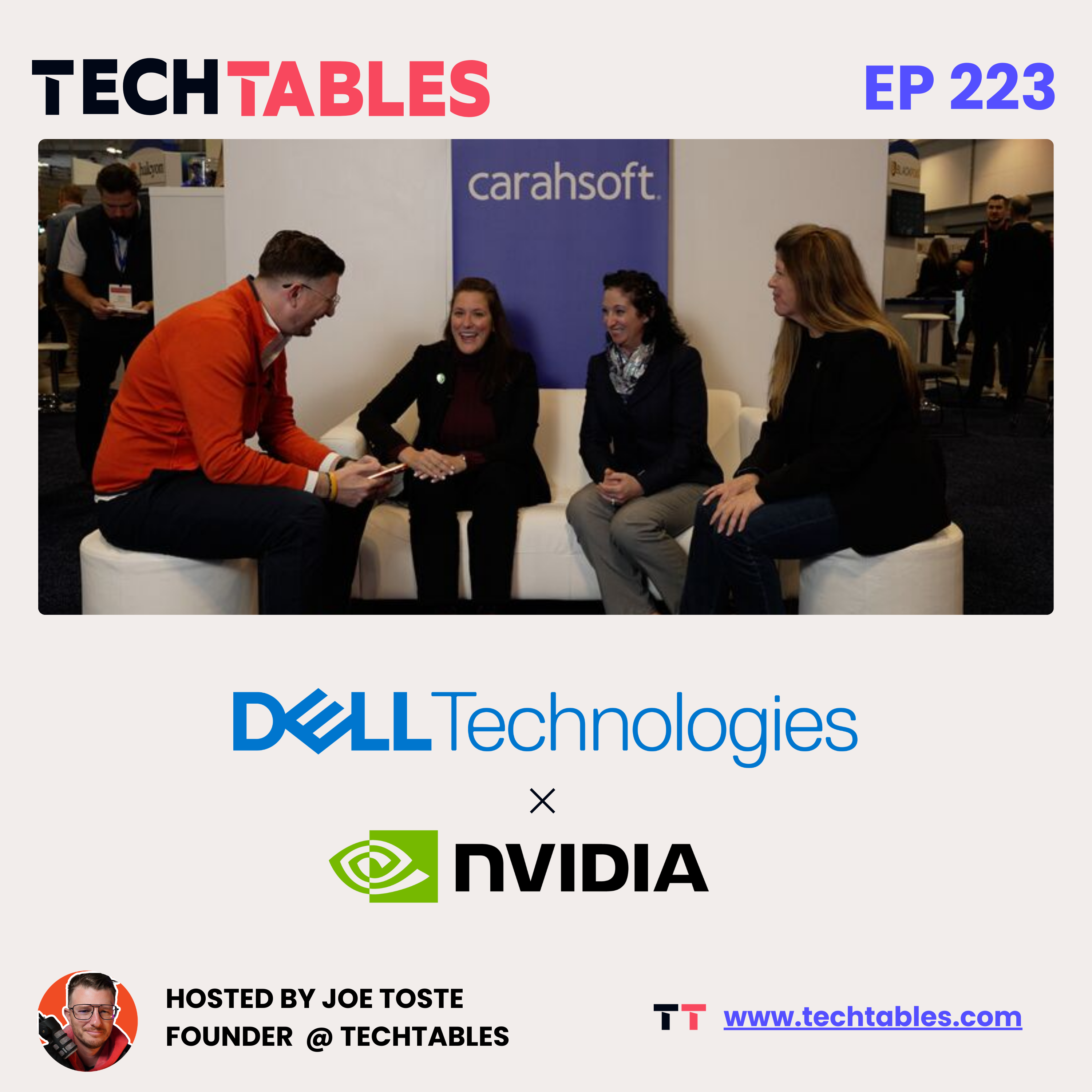
#### [#223: Maricopa Community Colleges, Dell & NVIDIA on AI Workforce Development](https://techtables.com/podcast/223-maricopa-community-colleges-dell-nvidia-on-ai-workforce-development)
[](https://techtables.com/podcast/235-the-edu-pocalypse-is-here-what-higher-ed-cios-need-to-do-now)
[The Better Together Series](https://techtables.com/podcast/tag/the-better-together-series)
#### [#235: The Edu-pocalypse Is Here - What Higher Ed CIOs Need to Do Now | Info-Tech LIVE NOLA |](https://techtables.com/podcast/235-the-edu-pocalypse-is-here-what-higher-ed-cios-need-to-do-now)
[](https://www.techtables.com/)
### The #1 Video Podcast for Senior Public Sector Leaders
Join 250K+ Public Sector Leaders—from State and Local Government to Higher Education—including CIOs, CISOs, City Managers, and Executive Directors—by subscribing to exclusive podcasts, live events, and invites to private meetups and more!
[linkedin-in icon](https://www.linkedin.com/in/jtoste/) [twitter icon](https://twitter.com/thejoetoste) [Follow us on Facebook](https://www.youtube.com/@techtables/) [Follow us on Facebook](mailto:joe@techtables.com)
```json
{
"@context" : "https://schema.org",
"@type" : "BlogPosting",
"author" : {
"@type" : "Person",
"name" : "Joe Toste",
"url" : "https://techtables.com/podcast/author/joe-toste"
},
"dateModified" : "2026-06-24T19:13:03.212Z",
"datePublished" : "2026-06-24T18:57:25.000Z",
"headline" : "#237: University of Pittsburgh & Dell Technologies: Can AI Wearables Predict a Heart Attack Before It Strikes?",
"image" : [ "https://techtables.com/hubfs/EP%20237%20Final%20Podcast%20Cover%20Art.png" ],
"mainEntityOfPage" : {
"@id" : "https://techtables.com/podcast/pitt-dell-on-the-ai-wearable-that-could-catch-heart-disease-before-it-strikes",
"@type" : "WebPage"
},
"publisher" : {
"@type" : "Organization",
"logo" : {
"@type" : "ImageObject",
"url" : "https://techtables.com/hubfs/TechTables%20Black%20&%20Red%20Logo%202023-1.svg"
},
"name" : "Levity Media LLC"
}
}
```