---
title: "#217: Supercharging Cyber Resiliency — How Texas Cities Achieve Enterprise-Level Security"
description: "Supercharging Cyber Resiliency: How Texas Cities Built Enterprise Security with AI, mutual aid & Cohesity-powered speed."
image: https://techtables.com/hubfs/Screenshot%202025-08-26%20at%2010.19.24%20PM.png
---
[Skip to content](https://techtables.com/podcast/217-supercharging-cyber-resiliency-how-texas-cities-achieve-enterprise-level-security#main-content)
[All posts](https://techtables.com/podcast/all)
August 27, 2025
# #217: Supercharging Cyber Resiliency — How Texas Cities Achieve Enterprise-Level Security
 Joe Toste · 39 minute read
[mailto:email@email.com](mailto:email@email.com)
🎬 Recorded at TAGITM's Annual Conference at the La Cantera Spa & Resort in San Antonio, TX. Visit [https://www.tagitm.org/](https://www.youtube.com/redirect?event=video_description&redir_token=QUFFLUhqbEdiNGd3cVFUVXhEbGMwVXFTTU1sRXA0ZUw5Z3xBQ3Jtc0ttaWRlMU50Sld5WGhuOERiUkx0LUs3UDNtQzRHSVlmTVdTY1FuMUJEbF9oV1ZnYWpyYTBSVlpCUk9mRnpLdEJxYlplRUNVRkhaV2VDM2d1enZnWTh6a000dHppZzJnbWM0X1pqUWVRbWRoOVJLMjVCdw&q=https%3A%2F%2Fwww.tagitm.org%2F&v=iXGEWeV2-V4) to learn more how TAG is serving as the premier organization for government technology professionals in Texas.
### 📬 **The TechTables Newsletter**
TechTables connects public sector technology leaders — CIOs, CISOs, and CTOs — through darn good conversations and peer-driven community. The best place to start is the newsletter.
**Subscribe now.👇**
### **Episode Summary**
What if cybersecurity in government isn’t about buying the newest tools — but trusted relationships, shared intelligence, and grassroots innovation?
In this episode, four Texas public sector leaders share how local governments are building enterprise-level resilience without enterprise budgets. From 27 innovation awards in the City of Seguin (and counting — Shane scored *#27 mid-interview*), to mutual aid agreements replacing $40K emergency response contracts, to AI solutions that collapse months of compliance work into hours — this is a masterclass in trust-powered transformation.
You’ll hear how the TAGITM community launched a secure statewide Data Collective (don’t worry — Eric double-checked the security for everyone), how a Cohesity box landed in a city office just two days after the PO was signed (Jody may or may not have had it ready in the trunk), and why the best IT decisions aren’t always about cost — but collaboration, community, and a few Hawaiian shirts.
### **Featuring**
[Shane McDaniel](https://www.linkedin.com/in/theshanemc/), Chief Information Officer & TAGITM President, City of Seguin
[Tony Gonzalez](https://www.linkedin.com/in/tony-gonzalez-a628243/), IT Director & Past TAGITM President, City of New Braunfels
[Eric Matthews](https://www.linkedin.com/in/ericmtx/), Chief Information Officer, City of Allen
[Marlin McFate](https://www.linkedin.com/in/marlinmcfate/), CTO & CISO for Public Sector, Cohesity
### **Timestamps**
([00:45](https://www.youtube.com/watch?v=uHhRpo8xZFk&t=45s)) “We’re Calling on you, Rishma!” — Shane’s Shoutout to Las Vegas Airport CIO
([03:00](https://www.youtube.com/watch?v=uHhRpo8xZFk&t=180s)) 27 Innovation Awards (and Counting): How Shane’s Rural Team Built Big-City Security
([06:00](https://www.youtube.com/watch?v=uHhRpo8xZFk&t=360s)) Data vs. Cyber Resiliency: The 2016 Shift That Changed Everything
([11:00](https://www.youtube.com/watch?v=uHhRpo8xZFk&t=660s)) Degrees & Certs: From Zero to 13 Degrees and 27 Certs in a Small Texas Team
([13:00](https://www.youtube.com/watch?v=uHhRpo8xZFk&t=780s)) Data Collective: How Texas Cities Built a Secure, Peer-Driven Vendor Intelligence Platform
([17:00](https://www.youtube.com/watch?v=uHhRpo8xZFk&t=1020s)) Mutual Aid Agreements: How 15+ Cities Replaced $40K Emergency Contracts
([34:00](https://www.youtube.com/watch?v=uHhRpo8xZFk&t=2040s)) RAG in Action: How AI Cut Compliance Work From Months to Hours
([43:00](https://www.youtube.com/watch?v=uHhRpo8xZFk&t=2580s)) No-Brainer Decisions: When User Experience Beats Price
### **Links Mentioned**
- [TAGITM](https://www.tagitm.org/)- Serving as the premier organization for government technology professionals in Texas
- [Cohesity](https://www.cohesity.com/solutions/federal-government/)- Modern data security and management for local government. Protect against ransomware and other cyber threats. Manage local government agency data securely and effectively.
### 🔥 Want more from the 2025 TAGITM Podcast Tour? Check out 2 other binge-worthy episodes you can’t miss.
- [#213: How TxDOT's AI Cut Crashes 29% — Plus Austin's Multi-Agency Crisis Response](https://techtables.com/podcast/213-how-txdot-ai-cut-crashes-29-plus-austin-multi-agency-crisis-response)
- [#215: CapMetro Built AI So Human Callers Can’t Tell + How Austin Put Data Stewardship Before AI Hype + UTSA’s “Humble, Hungry, Kind” Culture](https://techtables.com/podcast/215-capmetro-built-ai-so-human-callers-cant-tell-how-austin-put-data-stewardship-before-ai-hype-utsas-humble-hungry-kind-culture-all-with-limited-resources)
Whenever you’re ready, there are 3 ways you can connect with TechTables:
#### **1. 📬 The TechTables Newsletter**
Thanks for reading TechTables! Get early access to new episodes, insights, upcoming events, and more — straight to your inbox.
Join now: [https://www.techtables.com/](https://www.techtables.com/)
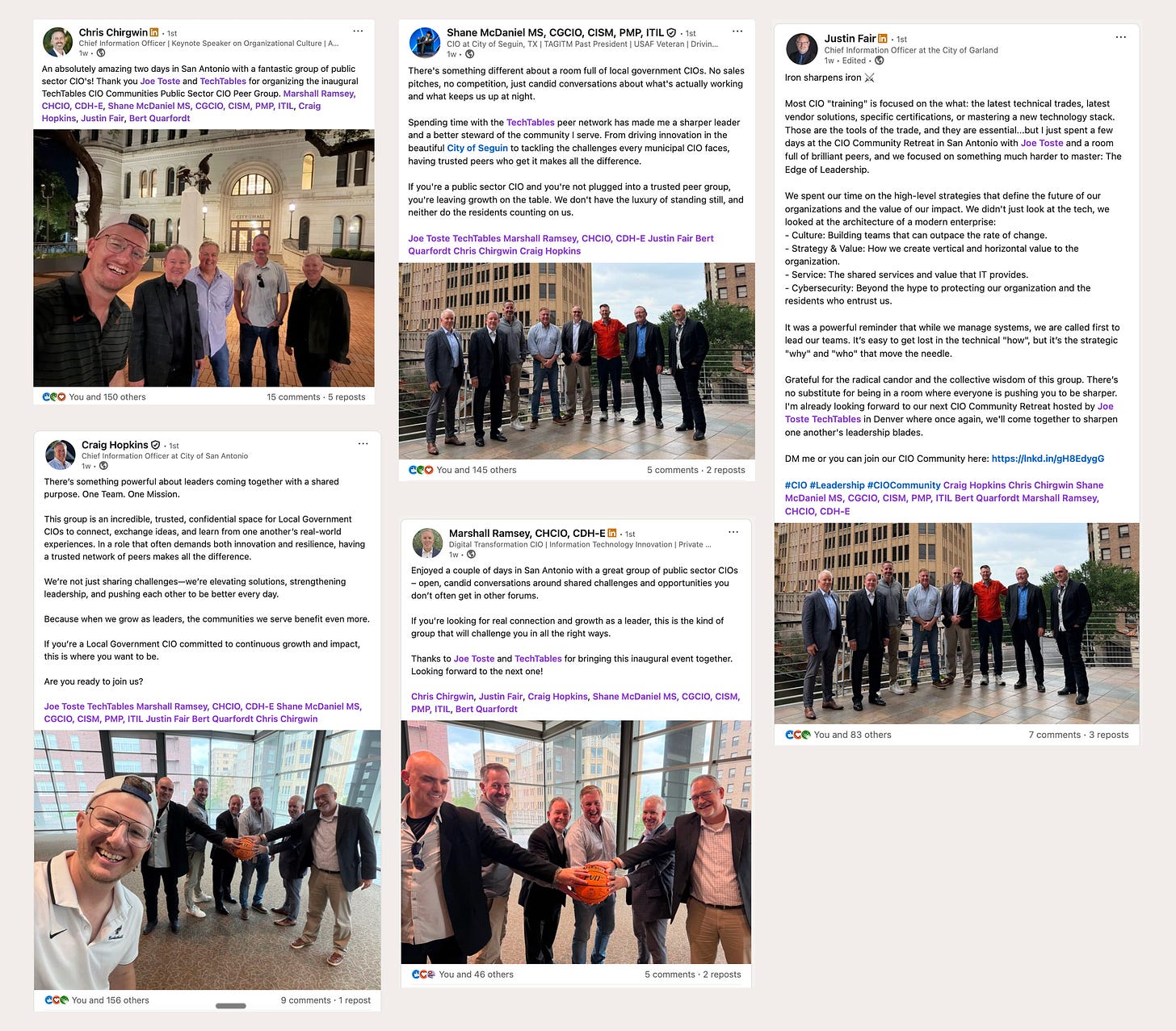
2\. 🤝 Are you a local government CIO who wants to become a better leader?
Check out our high-trust, vendor-free peer group built for local government CIOs tackling real challenges, honest conversations, and an authentic desire to become a better leader — our next retreat is November 2026!
Learn more → [https://techtables.com/communities-local-government](https://techtables.com/communities-local-government)
### 3. 🤝 The Better Together Series (Virtual & On-Site)
The narrative-driven series bringing together industry partners and public sector CXOs. Discover the compelling stories that unfold when we stop working in silos and start building together.
»»» Email [joe@techtables.com](mailto:joe@techtables.com) to learn more.
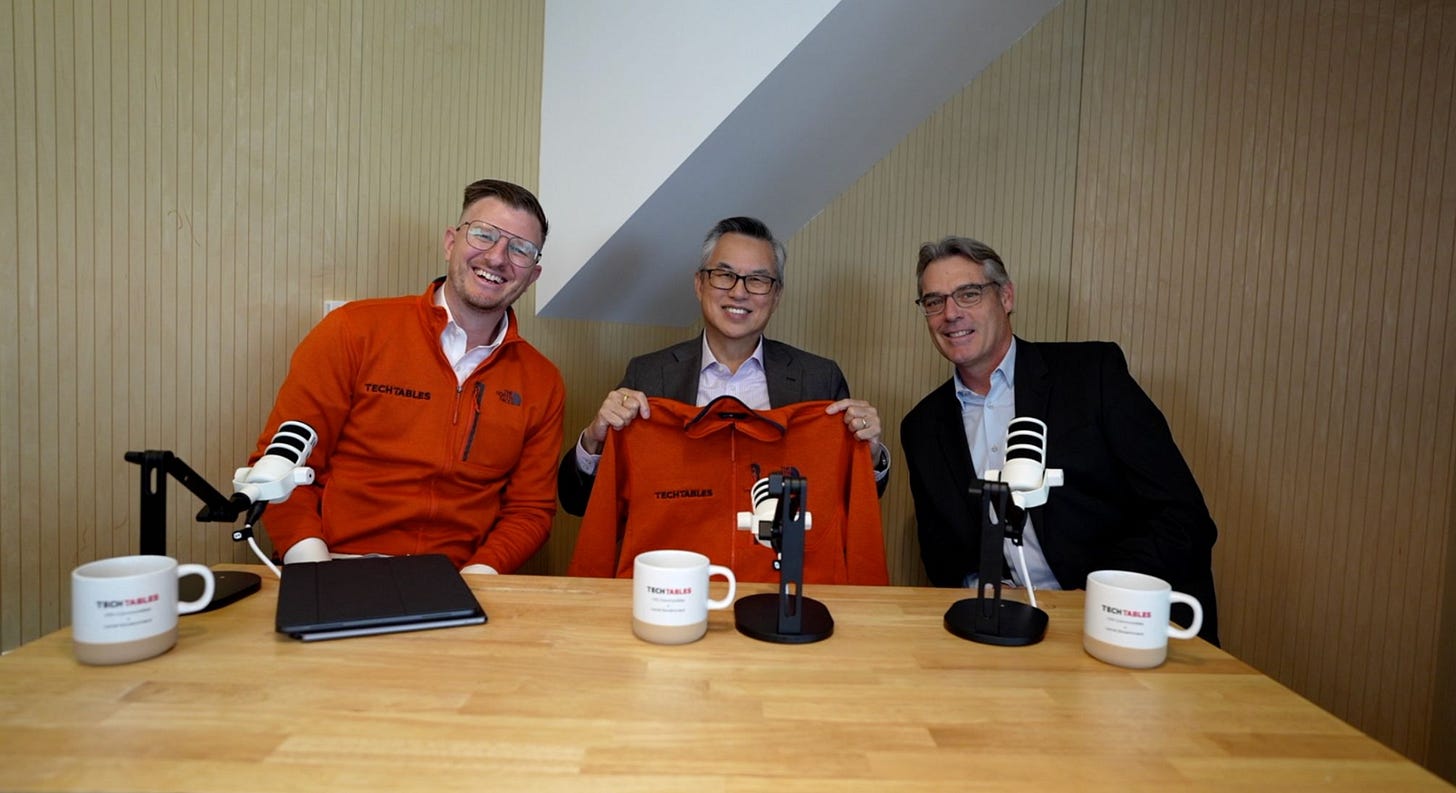
> TechTables Better Together On-Site with Peter Loo, CIO, LA County & Hannes Scheidegger, Chief Global Delivery Officer at Info-Tech Research Group
### Platinum Newsletter Sponsor:

Join TechTables & Info-Tech Research Group at [**Info-Tech LIVE 2026 - New Orleans**](https://preview.convertkit-mail2.com/click/dpheh0hzhm/aHR0cHM6Ly93d3cuaW5mb3RlY2guY29tL2V2ZW50cy9uZXctb3JsZWFucy1saXZl) (February 3 - 4, 2026) and/or [**Info-Tech LIVE 2026 - Las Vegas**](https://preview.convertkit-mail2.com/click/dpheh0hzhm/aHR0cHM6Ly93d3cuaW5mb3RlY2guY29tL2V2ZW50cy9sYXMtdmVnYXMtbGl2ZQ==) (June 9 - 11, 2026)!
Learn more about upcoming Info-Tech events here: [**https://www.infotech.com/events**](https://preview.convertkit-mail2.com/click/dpheh0hzhm/aHR0cHM6Ly93d3cuaW5mb3RlY2guY29tL2V2ZW50cw==)
### Gold Newsletter Sponsor:
****
> **[SentinelOne](https://assets.sentinelone.com/ghe/sentinelone-empowers)**—Learn how SentinelOne empowers this state to stay secure.
>
> **[Verizon Frontline](https://www.verizon.com/business/solutions/public-sector/public-safety/)**[—](https://www.verizon.com/business/solutions/public-sector/public-safety/)The advanced network that keeps first responders connected when it matters most.
>
> **[Carahsoft](https://www.carahsoft.com/)**—The Trusted Public Sector IT Solutions Provider™, supports government agencies and education/healthcare markets. Contact your Carahsoft rep today to access special discount pricing exclusively through the TechTables + Carahsoft partnership!
Transcript
Joe Toste: Welcome to the Public Sector Show by TechTables. Super excited to have you all on the pod, all first timers. This is incredible.
Tony Gonzalez: First podcast ever for me.
Joe Toste: First podcast ever.
Tony Gonzalez: I'm a rookie. I'm a total rookie.
Shane McDaniel: Can we send a message to Rishma to make sure she gets this specifically
Joe Toste: because she's a part of my private community.
You get early access to this episode before it gets released publicly.
Shane McDaniel: Hi Rishma.
Joe Toste: Yeah, he's that guy. Rishma. I know. Rishma is \[00:01:00\] the CIO for the Las Vegas Airport. Great gal. So quick intro, Marlin, let's start off with you. We'll work our way down. Little bit about yourself.
Marlin McFate: Sure. I'm Marlin Mc Fate.
I'm the CTO and CSO for public sector at Cohesity, the Green Sox. And basically been in tech, working for the government in some way, shape or form for the last 30 years. Either for them or with them. Starting off with being an Army veteran. But my experience runs the gamut for everything from networking to cybersecurity, your traditional SOC to storage to virtualization.
So I've run, both ends of it. And that's why I think they gave me both titles. 'cause I'm really good at here's the art of the possible and here's how it can hurt us. And then bringing those two together for a more ethical and responsible approach to what is the art of the possible.
Joe Toste: Do you
Marlin McFate: get double
Joe Toste: pay for two titles or
Tony Gonzalez: no? I asked, but they didn't get it's government related, so that's not gonna happen, right?
Joe Toste: We gotta try it, Tony.
Tony Gonzalez: So I'm the it director for the City of New Braunfels. I, this is my fourth municipal position of a, I'm a \[00:02:00\] Anderson alumni.
I'm a Microsoft alumni. I've been with another Big 10 accounting firm, so I've been a little bit of everywhere. And it's interesting to see things from the private sector and public sector side and so forth, but, technology's technology. It, we the technology solutions we need are not specific to local government.
They're the very same technology issues that private companies have. Yeah. I've never, before I took this job into Braunfels, I'd never been anywhere more than four years. So very much a, career nomad, right? But I've been here six and a half years now. They may be stuck with me.
Because that's like a lifetime for me professionally. But I love it. I love it as much today as I did the first day I got there.
Joe Toste: Love that. And with that shirt, they're definitely keeping you. Let me tell you.
Tony Gonzalez: This is an ode to my service desk. My service desk guys, about a year ago, started Hawaiian shirt Friday.
That's our casual day. And it spread from my service desk to the whole department, right? And so when I was president of tag, I thought, man, I need to have a gig for the week, right? Like some kind of thing. And I wore my Hawaiian shirts all week. And now that's just what I do.
Joe Toste: I love it. Is today Friday?
No, today's Wednesday. Today's \[00:03:00\] only Wednesday, brother. Today's
Tony Gonzalez: only Wednesday.
Eric Matthews: What day is it?
Joe Toste: Awesome.
Eric Matthews: Eric? Yes. Hi, Eric Matthews. I'm the CIO for the City of Allen, and I've been 21 years in local government. The last eight in Allen. Prior to that, I was in the city of Richardson and way back when did application development as private secretary consultant and helped some tech startup in Houston and did teaching, writing, speaking a variety of things.
And now really enjoy the local government scene and hopefully get to talk a little more about what we do with these guys here shortly.
Tony Gonzalez: He's the smartest of the three of us, I promise you that.
Eric Matthews: Yeah, I agree with that.
Joe Toste: Yeah. I agree with that. I so really funny. He's friends with Mark Wittenburg, who's the CIO for the city of Raleigh.
And Mark actually came to my Big Sky Montana event where he came on the podcast and great friend, great guy, but we had him on the collaboratory, but then you came on the collaboratory this month, which is great. So actually we got to hang out with him for an hour, got to hear from him, and.
Mark texted me and he's dude, I'm telling you, he's really smart. I'm smart too, dude. No, we're gonna get you, man. Don't worry. We're \[00:04:00\] gonna get to you.
Shane McDaniel: Wait your turn. Wait your turn. Yeah. Don't tell you something about me, dude. All Shane now. Oh, my turn. Okay. Shane McDaniel, CIO, for the beautiful City of Seguin here in Texas.
I have the great privilege of being the President of TAGITM this year as well. Career first 15 years Air Force government contractor after that, spent about five years in private industry and about the last 10 in local government. I purposely came to this environment because I'm a public servant at heart.
I had to work in private industry to realize that about myself, but I did, and I made the leap zero regrets. I'm a very happy man. I'm quoted saying the luckiest CIO walk in the face of the earth right there in Seguin. And love what I do. Happy to be here.
Joe Toste: Thanks for having me, brother Joe.
I'm glad this came together and I, he asked me right before we hopped on camera, Hey, are you enjoying the conference? And I'm thinking to myself, dude, I've been sitting here all day, right? Enjoying the conference. But I did hop in for about 10 minutes. At the moment where you're giving announcements to all the \[00:05:00\] sponsors.
And he said to my boys, Cohesity. Yeah. I was laughing really hard. Can you believe they elected me?
Shane McDaniel: Yeah. Yeah. Sidebar a little sidebar. Sidebar.
Joe Toste: But this is great energy that, that you're bringing, I love it. To jump into the podcast. Oh, yeah that, yes, that.
Oh yeah. Rishma podcast. Okay. Marlin, you've spoken about, you spoke a lot about the, the critical difference between data resiliency and cyber resiliency. Walk us through those differences and why it's so important for public sector organizations today.
Marlin McFate: All right I, and I've said this in the past I think it's probably one of the more misunderstood pieces in cybersecurity, right?
I see a lot of organizations still following the data resiliency side of the house or those methodologies and not adopting the methodologies that you need to be able to deal with a cyber event. They're entirely different, right? So I think at one point in time you'd ask me what is the difference between them and they're completely different, right?
Data resiliency up till 2016, let's just say. That was probably \[00:06:00\] sufficient. Organizations preparing either coop plans or disaster recovery plans. And they were looking at being able to, survive some sort of event, whether it be a natural event or some, between the keyboard and the, and the chair making a mistake.
What was similar about all of those is even if you tried to imagine the worst possible, like aliens coming down and blowing up the data center. You knew what the end effect was going to be. On that, everything is lost. So it's really just a math problem to figure out what I need to do to be able to recover from that event.
And that's where, concepts like 3, 2, 1 come from and, offsite back up and I need this many copies of something. When it comes to cyber resiliency, you don't necessarily know what the end result is going to be, whether how bad, what is actually been done, what has been affected. So cyber resiliency addresses a whole different set of capabilities and a whole different set of methodologies that need to be followed to safely recover from, basically the event to, safely and securely \[00:07:00\] recovered and up back up and running.
And we're just doing a really bad job. We've already talked about public sector and also in commercial. If you take a look at the news right now, we're not necessarily doing a great job of this. We wouldn't be having the stories that we basically see on a daily basis. So what we're trying to do is to take the one, the education so people understand the difference between these and they don't just conflate cyber resiliency with data resiliency and teach these the processes and methodologies, right?
It's not enough to just say, here's the five step plan. Because I can give you a five step plan, and if you implement it horribly, it's still, you're not gonna have the end results that you want. And yeah, very passionate about the difference between these two things.
Tony Gonzalez: And I think to me you kinda hit on it that, 10 years ago, data resiliency was the thing.
Yeah. And you really, cyber resiliency didn't really even exist in, in that the way that it does today. But it's almost like to me that data resiliency is now a sub component of cyber resiliency. Yeah. And you said yes, they're very different, but it has to almost fall under \[00:08:00\] that umbrella of cyber resiliency because it's a huge component of the recovery.
Yeah. And how you move forward with that. So that's how I see it.
Marlin McFate: Yeah. I would act, I would a hundred percent agree with you. In fact, I draw it as a triangle at the top. You have business resiliency. There you go. Yep. And then you have data and cyber resiliency. They all get com, basically lumped into, oh, I'm just doing cyber, normal cybersecurity and incident response.
And they're completely different. They rely, you must have cybersecurity to be able to do these two things, but they are individually, yeah. Different things. Even if you take a look at a framework, they're on the right hand. They, most of that activity is on the right hand side, right? Yep.
Resiliency is now another step beyond that for cyber resiliency.
Joe Toste: That, that, that is fantastic. And I like how you used the word conflate earlier. Such a, I'm using my $50 words here. Wow. I wanna be as smart as, no. Is that a g? Is that a GMA business term? So Shane, you've earned 24 innovation awards.
Is that true number? You should make that up.
Shane McDaniel: Technically we're at 26 now, but Who's counting? Dude? Hey, outdated data Joe 26.
Tony Gonzalez: Outdated data.
Shane McDaniel: I did get another one \[00:09:00\] today, so I guess it's 2027. 27.
Joe Toste: Okay. Hey, Rishma, 27 Awards. How do you 27. But who's counting, but who's counting? 27 awards. Okay. So on that theme how is your approach to cyber resilience? Evolved. Do you have any of the awards related to cyber resiliency protecting the city? How are you thinking about that?
Shane McDaniel: Several. Cybersecurity is my background. I said government contractor, that whole private covert world.
And so we were doing it before cyber really became prominent, in the ecosystem of our world here. We were installing firewalls and stuff way back in the day, and I didn't really understand it at the time. We're going back almost 30 years at this point, right? It, it is evolved to such an a great degree, right?
Probably my, one of my favorite awards out of the 27 27 27, thank you. A couple years ago I was in Washington, DC it's the CSO 50 where 50 projects from around the world were \[00:10:00\] recognized and the city of Saim was there alongside Microsoft, United Airlines, CVS. All these major corporations and we were the only local, state, or federal government entity to be recognized for our cyber program, for what we're doing with cybersecurity in City of Seguin.
So I, I was beyond honored to be, at that event and just what we're doing. It makes sense for us, but just the fact that it was recognized amongst, some really incredible corporations, but there's also been super cool stuff, like nothing to do with recognition and whatnot.
We've been featured in a Paris based magazine called Marianne for how we're attacking cybersecurity in our little rural city. So like weird things like that have come up over the years. So pretty amazing. I don't necessarily know how some of these things happen, even though I'm in the middle of pretty much all of it, but like they, they seem to do and they seem to resonate.
So we're super happy to share our story and I'm very proud of what we do in our rural city.
Joe Toste: What are like one to two lessons \[00:11:00\] or learnings that you would share with other rural cities?
Shane McDaniel: I think it's applicable across the board, specifically, like from day one, whenever I started my role seven years ago one of the first things I went to bat for was to greatly increase our training and travel budget.
I wanted to make an investment in people. One of the things that isn't, you're not gonna see it anywhere out there as far as the media stuff that we do, the magazines, the podcasts, what have you. You'll see it on TechTables live, right? So this is gonna go out to the world. One of the things I am most proud of in my career of the city of Seguin, when I started there in 2018, I had one person on staff with a four year degree and zero industry certifications.
That number right now is 13 degrees and 27 certifications. Those folks bought in, more than half of my staff graduated from local school districts. Some of them, it's the only professional job they've ever had. We've made that investment and those 27 awards and all the positivity and the cool stuff that happens could not be more proud of those \[00:12:00\] folks.
It's all because of them. I'm a, I'm head cheerleader dude. That's it. Head cheerleader. I love that. Head cheerleader,
Joe Toste: facilitator. I love that. Tony, I wanna jump back to you, especially on the data front. You, we spent an hour, maybe 75 minutes. Man, it was great.
Tony Gonzalez: Sorry about that.
Joe Toste: No, I love it. This is literally what I do.
I'm curious, and you showed me the data collective project that, that you have for tag that you've been helping other cities, local government make data driven decisions. How does this collaborative data sharing. It enhance cyber resilience across Texas local governments?
Tony Gonzalez: It, again, the cyber resiliency is I hate to say it's new 'cause, it's been around for a long time, but just, the last 10, 12 years, it's become, so much more critical than it ever has been.
Just because of all the stories that we hear and all the events that happened. And one of the things that we do as a big part of TAGITM is just share data, right? And one of the things on the listserv that, that. It eats up our emails all the time, is what do you use for this?
What do you use for that? Because none of us feel like we can reinvent the wheel, right? I want to know what these smart guys who I \[00:13:00\] respect are using, because that helps inform the decisions I make and the platforms that we choose. And so this our organization used to have a an affiliation with genus, which is a national version of TAGITM, and they had something that they called the data dive.
And you would go in there and you'd enter your data. And when you did that, then you could see the results of all the data. But they abandoned that. And I was like, man, that's a really bum deal. Because it was, the tool had great potential, but it and look, most of us can relate to this.
He kinda had software bloat over the years and it became something, it was too laborious, right? Entering your data was pretty easy, but then there was no the getting the reports out of it was incredibly difficult, which minimized then the usefulness of it, and then people weren't using it because the whole idea is put your data in and then you can see the other data.
You quickly found out I couldn't really see the other data. So when we dissolved our relationship with Genius. I said, you know what, this is the perfect opportunity for us to recreate that. And certainly we have enough \[00:14:00\] creative minds in this org where we ought to be able to recreate that, but with that eye towards making sure that everybody could see the data after they input the data.
And hopefully it's been a really positive, I've got a lot of really good feedback from it. And just the ability for especially smaller agencies to be able to reference what do. What are the bigger and larger cities that have more staff and, maybe a little more expertise, what are they using and can we then go to those vendors like Cohesity and a lot of other folks that are here this week and how can they have a conversation about I only got four staff, right?
Instead of 18 staff, so is this solution the right one for me? But they can look in the data collective and see what is the most used products in certain areas. I think we have 95 or a hundred data points in there. And I think it's been a really good project for me.
It's been enlightening for me. Look I own the application, so I get to use and see the data all the time, right? I use it more than anybody else. But we've gotten really good participation recently. One of the things that was asked of me was, Hey, look, it's \[00:15:00\] great to see what people are using for backups and security and, this platform and this platform.
But the other thing that really takes up a lot of our email in the group is job titles and job descriptions and salary ranges, right? We wanna make sure we're being good to our people that work for us. And somebody said, Tony, can we do this? And I'm like, man, I couldn't do it with the solution we had right then.
But then when I moved it to a new platform recently and we now have 250 job descriptions and titles and salary ranges and org charts for us every year during budget season, right? We go, we ask for new positions. One of the hard things is what do I pay this person right whenever I hire 'em?
Because you gotta be competitive, right? And now you can just go look that up and it's sorted by functional areas and we had a lot of really good feedback from there. So it's been a really valuable tool on the technology side, but also on the people side. And I love that we can marry those two together with something that adds value to every member here this week.
I think it's been pretty fun.
Shane McDaniel: Eric is laborious a word?
Tony Gonzalez: That's my 50 cent word. That's good. That's my 50 cent word. We're going with that. I'm gonna \[00:16:00\] say
Eric Matthews: yes. I knew that. Judge rules. Yes,
Shane McDaniel: judge rule. I was about to
Joe Toste: call BS on that. I thought you were gonna have a follow up to that. And that's actually really funny.
Eric, are you a part of the data collective?
Eric Matthews: Yes, we are. We contribute our information and use it quite a bit. In fact we're looking at hiring a new position next year. We. Looked at. Nice. Yeah. Ranges. So yes, we are, we're riding that. Yep. Wheelhouse. Exactly.
Joe Toste: So you, when we met you, you talked a lot about, you're on the smaller side, comparative to, larger cities. So I was curious around, how are you balancing that cost effectness, I think the term you used, it's like just. Being really lean, right? Can you just talk about running the organization and
Eric Matthews: Yeah. I think and being lean, I think is something that a lot of cities in Texas share.
Yes. We do what we can with the resources we have, and one of the ways we do that, and I think all of us do that, is things like this conference TAGITM with the membership. Our listserv where we have a lot of discussions is really piggyback off the ideas, the thoughts, the collaboration, the sharing of our experiences with.
Either technology or a approach, a \[00:17:00\] process working with within the council or the, within the governmental structure in order to get something done. And so working with others, collaborating with others is a big part of making, because you really have one good time to get a project in. It's successful because it's taxpayer dollars.
You can't fail multiple times in doing the same thing, right? So you're looking for those best practices and those that have gone before. Some examples. The state and local government cybersecurity grant program that came from the federal government. That has been a big game changer for a lot of organizations.
We applied for four and got four grants this past year, in part because, but in part because the members within the TAGITM org group, we collaborated across our listserv over the period of a few months talking about the best way to apply for those things. So we were helping each other. Go for scarce and limited funds that we're all going to share.
So that's unusual, I think, at work, maybe more specific to public sector than private. The other thing, several years ago, the City of \[00:18:00\] University Park and the city of Allen realized that, if we have a critical breach, an incident of some kind, the standard, the default is to go ahead and call that third party, bring in experts, bring in, boots on the ground to help remediate and take care of those problems.
It's very expensive for cities of all sizes. And so University, park and Allen, we said can we come up with an approach? And Tony's done this in central Texas as well, but can we come up with an approach that creates a a mutual aid, a agreement between entities within an area so that we have about 15 or 16 different entities right now, cities and counties I think the Water district as well up in North Texas that are all partnered so that if any of us get hit by a breach, we have the ability to call on the others for help.
People, equipment. And we've already laid out and spelled out the terms of those agreements illegally between our cities and our entities. So you doing something like that, a partnership to try to take some of those expenses and pull them a little bit more in-house or more cities helping cities, that's, you know what public sector or public safety does, that's what
Tony Gonzalez: We saw that with \[00:19:00\] fire and police. They have those mutual aid agreements all the time. And we said, Hey, we can do that with tech stuff. I, so I listened to North Texas Municipal Water District earlier today, talk about their cyber event in the last year. And one of the things that they did, and I think it's a great example of where the ILA could help, but one of the first steps they did was they had to bring up all their stuff in a test environment.
To verify that it was, not infected and the backups were good, et cetera. Sometimes though you don't, you might not have the hardware. To be able to do that, and that's then a whole nother expense. But you could call all the cities around you and say, Hey, does anybody have a couple of spare physical servers?
And yeah, I if I were there, I could loan that to you for 60 days, a sandbox or something that you could use as a staging area to verify everything so that you don't have to spend that, that 30, $40,000 buying this stuff on an emergency basis. And then you can really focus on what you really have to replace.
So being able to help each other out, because, you said it right? We all have to be lean. That's forced on us. \[00:20:00\] We I'd like to think that we want to be lean and be responsible, with the tax dollars we're given, but we have to be, we don't have a choice, right? And so that I, the ILA is a just, I think it's a great tool to have in your back pocket as a local government.
It official. That's a wonderful idea. Yeah. So it's like a mutual defense treaty almost, right? Yeah. Absolutely. And look, unfortunately the reality is more and more of us are getting hit. Man, that's one of the first resources I'm after I call the insurance company and I call my boss.
I'm gonna start calling the tailors of the world, the Texarkana of the world, the people that have been hit before and say, man, help me. Because I'm in a little bit of a panic. I hope I don't panic, but it's probably just in the next hour I might. And those people talking you off the ledge and say, first of all, you're gonna recover.
Okay. And then you can calm down and really start to address the problem. And that having that access is amazing.
Marlin McFate: Yeah. I'm really glad what you said also, by the way, about you, you describing what we call the clean room. Yeah. Yeah. Yeah. So I'll give you an example of what not to do. 'cause you think we as cybersecurity professionals, we all \[00:21:00\] know this, right?
But we've seen public sector agencies do things like just use the magic button, find the last clean copy of data. Yeah. Restore from that. And not realizing all we're doing is we're not removing any persistence devices, we're you just basically turn back the clock and I've seen one 12 times.
Tony Gonzalez: That amazes me
Marlin McFate: and they what is their recovery objective, right? It's probably a day. They're 12 days in now, right? Yeah. Yeah.
Shane McDaniel: Wow. Can I touch on something Eric mentioned? The state and local cybersecurity grant program. That's actually how we paid for your box there. Yeah, very fortunate to have that available to local governments.
And I gotta give Cohesity credit as well, because we cut the purchase order. It was towards the end of January once we got all the approvals taken care of and whatnot. That thing was the physical box was sitting in my office. I kid you not two days later. And I never figured that out. Like, how did y'all have that in my, literally in my office two days after we cut the po?
Yeah, that was the Cohesity box. I'm not
Marlin McFate: exaggerating. In Texas and other states, we \[00:22:00\] try to do that, basically help guide the customer if there's a program. That they can utilize to pay for the technology. We try to help them through that process. I don't know if we helped in yours or if you already knew about it.
But states are big, right? So they don't even know sometimes know the programs that are available to them.
Shane McDaniel: I thought it was just sitting in Jody's truck, just waiting. He's just waiting to drop it off. Like when you gimme that po dude, I'll bring it to you. He's making the rounds like a
Tony Gonzalez: newspaper kid right here.
Here's a box. Swinging a box. A box, right?
Shane McDaniel: It was large and heavy.
Tony Gonzalez: That's why they brought it to you. So you can lift with those big muscles you got. Got it.
Joe Toste: TechTables that, that box could have been in our gear for all I know. So Tony, let's, lets. Keep drilling down on the data collective in the sense of being able to extract more value rather than just being siloed by yourself.
Which I think is like such a great example. I think a lot of other agencies, like state agencies or other local governments struggle to share data and then they end up just basically solving each other's problem multiple times over. 'cause no one's talking to each other, no one's sharing.
\[00:23:00\] Absolutely. What other opportunities do you see for public sector organizations to better leverage their data assets?
Tony Gonzalez: Wow, that's that is the massive question. I, first of all, I mean there's, there's a lot of when you talk to your executive group, right? Your city leadership, your city council, you can't even use the word data assets because.
That would just be the proverbial bubble above the head with the question marks in it. They're like, what? What is a data asset? So that you don't wanna bring that up 'cause then you have to then explain what that is. And you gotta use it in, or, you gotta approach it in very practical terms, not the geek speak.
Use it in a sentence. Yeah. Yeah. Be able to use it in a sentence that they can understand that, that's right. I think there's a ton of opportunity to, I think sharing data assets again, with your neighbors, right? Because again, look, all of our cities do permitting and we do licensing, and we do, all, all this stuff that we do that is the same city to city.
And so understanding your data assets and then talking to other agencies about what do you do with this data and how does it help your business processes \[00:24:00\] across your city be more efficient? And so I think there's some, I think if we can prove the value with the data collective of, not right now it's limited to what solutions do you have in place, and then the job title and salary info.
But if it can move then to something larger about not only this is what you have, but how do you use it, right? And have those kinds of solutions that we can easily share with security in mind. Because you can't just throw it all out there, i, matter of fact, I, if I remember right, I think you were extremely involved from the beginning or you wanted to be involved with the data collective, but he said, but Tony, you got, you have to assure me that this isn't a secure platform.
Because if I'm gonna list my CAD system, my financial system, my HRIS system, that's what my network platform, right? He's Tony, you're asking me to put all of my attack vectors out there? And here I was thinking about just the data sharing and how valuable it is, but yes, what this is, it's what he was thinking, and you just said it.
I do not need to put a \[00:25:00\] roadmap out there for these bad actors to say I know the 80 solutions that you have, and I've got a, I've got a hack for this one and this one, so I'm coming after you in many ways. And I mean that like when you said that to me via email, I was like, oh gosh, that's a like.
I didn't really want to know that was what I was doing potentially. But luckily the platform we use first and the one that we use now by the way, notice how I'm being vendor agnostic there. I'm not really even promoting the platform. Cause neither one of 'em are a sponsor here this week.
So they don't, they don't get that privilege. But we've got some real good security there. You have to have an account. You can see all these solutions, but you can't see what cities use it. Because again, if that roadmap is out there, that's an attack vector for people.
I just, part of it is figuring out how to securely share those data assets and figuring out what he does, what she does, what he does, and how can we replicate that in our environment.
Joe Toste: So how did he convince you?
Eric Matthews: He is Tony.
Tony Gonzalez: Yeah.
Eric Matthews: So
Joe Toste: he what?
Eric Matthews: He's Tony.
So he
Joe Toste: said it was fine. Was his reply back? I'm Tony. \[00:26:00\] Yeah. Enter, do you
Tony Gonzalez: not, do you know who I am? Don't challenge me. Oh gosh. Oh gosh.
Shane McDaniel: And I would say good on people like Eric that thinks forward for the rest of us, they're just like, yeah, Tony. Here you go, dude. Whatever.
Tony Gonzalez: Oh, absolutely. Look, that's my worst nightmare is that somebody would have some kind of an incident.
And then in the forensics and the, investigation of it, if somehow they found out that the reason they got attacked was ' cause their data was discovered via the data collective. I would never show my face at this conference again. I would, that would be the heel of all heels in local government, right?
I have to know it's secure or else these guys are not gonna put their data in there.
Eric Matthews: And to be fair, it's a cloud platform that's well known that Tony has a lot of confidence in and shared. Their security information so that we understood, what how it was being secured, where it was stored, all the things you need to know, just like working with a vendor.
Kind of a similar approach. And once we got the information, yeah, it makes sense, we can move
Tony Gonzalez: forward. And I'll tell you what, it gave me an appreciation for the grilling that we do for new vendors, right? Because we all do that, right? \[00:27:00\] When I bought Cohesity, okay, this, my guys told me this is what we want.
But I'm like, okay, what have you checked? Have you checked this, and this? From a security perspective? Because those are the first questions we ask. Now, I don't even get to how much it costs, right? That's almost, I hate to say it, but that's a very low evaluation piece.
It's, does it meet all these other requirements? We grill, we talk about that all the time on the listserv, that what questions do you ask your vendor when you're getting a new one? How do they prove to you that they're secure in protecting your data, et cetera. That was essentially what everybody was doing to me when I was throwing the data collective out there.
And, you, luckily I got thick skin, I didn't take it personally at all because it was very valid concerns. But yeah, there was a lot of tell me about this, and this before I dumped my data in there. And I love that you mentioned that because if we didn't do that, we would not have a third of the participation that we have, right?
Because it's too risky.
Joe Toste: I know you have some thoughts. Top of mind. I could see your brain.
Marlin McFate: No, I'm a hundred percent agree with the what was going on here. Really what I was thinking was like, now you understand my role, the difficulty of \[00:28:00\] my role, right? There's the one side, it's I would love to do this on the other side over here going, how can it, how can it hurt me?
Tony Gonzalez: What's the worst case scenario here?
Marlin McFate: And so it's just that adage of, sometimes it's a great idea, but should we actually do it? The other thing too is since now you, you were able to work together like that, you made those thoughts 'cause I imagine there was some development in this that had to go on.
So I'm imagining that there was a more secure development that took place. Oh yeah, for sure. You know what I mean? Yeah. I see too many things that didn't have that interaction. And when it gets out there, it's completely insecure system because security was never really thought of upfront. And then also, ask green socks again. The thought of, if this were to be destroyed or if I were to have that problem, or how could I obfuscate data or cleanse data. So that, and it sounds like you're doing a little bit of that, where two pieces of data are never together, so you can't see like the actual state or city that has it and what product they're using.
So that's great. But yeah, so then that has to be completely refactored to be to be useful. It was.
Tony Gonzalez: Definitely
Marlin McFate: \[00:29:00\] a benefit to have that.
Tony Gonzalez: And I'll tell you, it's, I think it's a fun story too about how doing this we're volunteers, right? And all this stuff that I do with the data collective, it's not incredibly labor intensive.
But that question that Eric asked and then other people asked those questions, it was all about the data collective. But here's what it did though, is it even heightened my focus on security for the internal applications that I build on the same platform? 'Cause it's one thing to be able to build it, like you said, but you have to ask, what's the potential risk here?
And then is it worth it? But I can say, look, yeah, we can do this. And again, this the same principle of maybe we certain identifiers they're important to have for the people who really need deep dive access into the data. But for other people, they need the more generic view of the data.
And I can governance and I can do that within this platform that I have right now. I have really granular roles of security, but I wouldn't know how to use them to the depth that I do if TAGITM hadn't helped me see that we need to do that with the data collective. So there's a real while the \[00:30:00\] city, some of my city time is spent helping TAGITM, it's come back to us in exponential terms because of the internal security that I give to the other applications that I develop internally. Now, again, you talk about a benefit of TAGITMI mean, I'd have to go to how many classes to learn that, and I got it just as a normal course of business, and that's awesome.
Joe Toste: I love that.
So Marlon talk a lot about rag uhhuh. That's probably
Marlin McFate: what you saw on my face.
Joe Toste: Yes, I am getting there. So first. For everyone who watches Nationwide, what is RAG
And then second walk us through how you're applying this with Cohesity throughout your portfolio of public center customers.
Marlin McFate: Absolutely. Retrieval? Augmented Generation. One thing I will say, because you said you wanna do more with the data directive I think this would actually really open up some possibilities. So I'm always so first before we go there, and I'll try to be as quick as possible 'cause I wanna be cognizant of the time. I think we have to explain, because the two won't make sense, Cohesity and why I'm talking about rag.
One of the things that I think is different \[00:31:00\] about Cohesity than anything else in the competitive landscape or in this market, is. I feel like most organizations that do backup recovery, cyber resiliency data, data security, data management, they really have just stopped at, the backup and recovery portion.
And then like you, you were talking about earlier the who you were looking at prior to us, right? Very, very similar in, in that bar. And then the next one above that is what are the security capabilities? Do they have ransomware detection, malware detection? Then to your point, is the system itself secure?
Those are the two look, just call them bottom categories, and that's where everybody stopped, right? We took a look at that infrastructure and said, this is an infrastructure that has a ton of valuable data in it. And it's really the only area in it that organizations have been completely okay with.
Listen, I'm gonna hold this here. It's got a lot of data, but the value they looked at it was, I just have the ability to recover. That's it. Till something tragic happens, there's really no value in this \[00:32:00\] infrastructure. We said no. How can we extract more value out of the data that's inside of that system, especially in public sector?
Data from the past. It's very valuable. We're always looking at trends, we're looking at, and we're gonna start wanting to build models, and that's taking past data and creating a, a future prediction, right? So we were like, how can we use, utilize this data more and provide value?
And so that's where retrieval augmented generation came to play, right? So what it allows you to do is basically take a large language model or generative AI solution which has its own problems like hallucinations. We're all familiar. It'll just lie to you. Yeah. If it doesn't know the answer, it'll be like, ah, we, I think we've heard about the story about the lawyers that submitted a rebuttal to the court, that was written by chat GPT, that didn't go well for them.
At the best case scenario, it'll tell you that it doesn't know what it is, but that's, probably will hallucinate. It can be out of date. And lastly, which is more importantly, it can't tell you where it got the data from. So a good example is I asked chat GPTA couple months ago.
How many moons does Jupyter have? And it's 70 something. \[00:33:00\] And I said, okay, now only use data from nasa. And I said, oh, 56, it's got well over a hundred moons that shows all three of those problems. It's out of date, it's lying to me 'cause it wants to make me happy. And it can't tell me where it got the data.
I said, only nasa, does that mean that NASA is somewhere near it in the database? So with retrieve augmented generation, I can now take data, right? So think of the data in your massive amount of data. Basically pull the embeddings and vectorize it and present it to a large language model and generative AI solution via rag.
Now the answers only come from that dataset, right? So now I can ask questions and know that it's only gonna pull the data from that data as long as my data's good and correct. My answer should be correct. And it'll also say so that I, as the human can do the due diligence of the human. It'll say, here's where I found all that information.
So you can go check and actually see, I don't know if we have time for the example I, you and I talked about before, but really what we've been able to do one example was just compliance. I won't go through all the things. When I asked them how long it would take them to \[00:34:00\] figure out the information to respond to this compliance question that they were being asked from a regulatory body, they said to come up with a comprehensive answer for this thing that happened three or four years ago would take a team of at least a couple of people almost a month, if not more, to come up with a comprehensive answer.
All of the information and artifacts we were able to present the same data to to a rag solution, our rag solution, and come up with a pretty comprehensive answer in hours as opposed to a month or two. So it's a huge time savings and it has a plethora of other uses, above and beyond that.
I think it would really be able to, that's impressive. Dig through that data in a way that's, traditional methods you just can't do
Tony Gonzalez: And I love the way that you pointed out that ai, everybody's in love with ai. I am. We're trying to constantly figure out, that's such a huge part of our job now is how do we bring AI to bear in our agency and we've got security concerns and integrity concerns and all those things.
But, we also say that AI's only gonna produce something if you give it a really good prompt, right? If your \[00:35:00\] prompt is really generic, you're gonna get a very generic answer, right? But I hadn't even really thought about that. It's also the data source that it's referencing. And which is another reason not to necessarily use chat GPT and copilot and so forth, because you don't know all the time where those data sources are coming from.
And a lot of the solutions that we need to bring, the AI that we implement, really needs to only be limited to our data sets. So that we know that data is. At least as accurate as we can be assured of. And not because what you don't want is one answer today, a different answer tomorrow, or an answer from chat GBT and one from copilot and one from, somewhere else that are all different.
Why? You said what? You said 50 something, 70 something and a hundred something. Yeah. That just gives every result you've got, it brings it into question yeah. So the that's an interesting concept. Yeah. And without rag,
Marlin McFate: the only other options, especially for, both corporations, public sector alike, was to take their data and basically train your own large language model.
Maybe \[00:36:00\] starting with, a a foundational model, but then training with all yours your data. What happens is now I have to train all the new data on a daily basis. Not only that, I need an incredible amount of horsepower and gpu. And storage to be able to do that. And then I also need the expertise to do like the refinement and the reduction and all that stuff afterwards.
Tony Gonzalez: It makes me think of the chatbots, right? That's been a very big thing in local government recently, last couple of years, right? Is create a chatbot. But one of my concerns about that is that chatbot's only gonna learn in many ways if there's a constant care and feeding in the background.
And the question is, who's gonna do that? ' cause the departments are gonna think that's our job, is it? But it's not because it's gotta be, the economic and community development group, they've gotta look at the questions that are coming into the chatbot and see which questions are not being answered, where they opted out to hit zero to talk to a live person.
And but they gotta have good data there to say we're answering 30% of the questions that are related to this and 70% related to this. And that \[00:37:00\] should then tell them that we need to put more machine learning into this area so that we can answer 70% of the questions on both of those areas.
But that's not it's job that's gotta come from the user departments because I don't know those answers, and you don't know those answers, and Shane doesn't, right. So that's a, I think part of that's with AI too, right? Because where's AI learning from, right? It's not gonna always be it that it's learning from, it's gonna be from our user departments and making sure that our customers understand that when they're asking for an AI solution that's gonna be really important.
Joe Toste: It's actually dovetails really well with Eric. When you came on the collab, we, you talked about the AI working group and you just wanna talk a little bit about that and then the strategy for how you see that developing throughout the city?
Eric Matthews: Yeah, sure. City of Allen has put together a few employee working groups recently, a variety of topics, one of them being ai suggested by it just because we know that's on everyone's mind.
Let's go. And so the initial approach from our city manager's office was, Hey, Eric. Get three or four IT people in a \[00:38:00\] room. Y'all come up with this approach and this strategy. Let's tell us what we need to be doing. And I said, Nope. Let's flip that around. Let's get people from across the organization that have an interest in AI that have maybe some experience or not.
But just come from different backgrounds, different perspectives, and get them in a room maybe with some it, but I can be an advisor, right? And that's what we did. We put together a 10 person committee group. And our mission right now will, we're doing a workshop next two weeks that is going to focus on building a foundational strategy for ai.
A set of a vision for that and a set of use cases that we're going to recommend to the city management so that over the next year we can implement some of those use cases. See where those go, and iterate on that, knowing that, we only have the final solution, but we're gonna have a set of.
Policy guidelines of things that'll help the organization think about AI in a way that is respectful of our employees, respectful of the community, the data that we have and that can hopefully accomplish something that will augment our employees and their ability to get work done as \[00:39:00\] opposed to replace.
And so this is a big mission for us now, but yeah, having non-IT people focus on this because really. Like a session I was in this morning. No one's an expert in AI right now, really. And so let's get all of the people that are being affected and actually do the work that can advise on what would make their lives and work lives better.
So that's where we're going with it.
Joe Toste: I love that. I remember when Craig Hopkins was on the call and he had said, it's like back in the day, like when Microsoft Office was like, your standard resume today is, ai. Yeah.
Eric Matthews: Prompt engineer, right? Yeah. Is that what I'm doing wrong?
Joe Toste: And I just thought that was like such a great analogy 'cause it just took me back to I know I'm younger than all y'all, but I remember Are you, huh?
I'm for sure younger than you. There is no way. I remember, dial up. I remember going, are you sure you're younger? The desk? Yeah. Yeah. Going to Radio Shack. And you have, you read the manual, you talk to somebody, and I just want you to know, our team won eighties trivia night last night. So go ahead.
Tony Gonzalez: Very nice. \[00:40:00\] Yeah, radio Shack. I
Joe Toste: love it. And I love Radio Shack. I was begging my mom to take me to Radio Shack, but and my grandpa, I turned, I learned to write on a typewriter, which is crazy, but my grandfather bought us that giant gateway looking cow box that it came in. Yeah.
And it just took me back to now, especially with AI and gen ai, like no one's an expert and the kind of the best people are just the most curious ones. They're poking around. You get back, people are having fun, what are you doing? What are you doing? I just I talked about this, but I love Claude.
There's a bunch of 'em out there, but Claude in particular, and I use Gmail and I mentioned on the other podcast and on the collaboratory, but. I had it come every email and every calendar invite, and it was giving me stats and beautiful charts. Stuff that would just be incredible to that, the amount of time.
And then just going down the rabbit hole and then it tells me, you're outta storage. I'm upgrade to the max for 200 bucks a month. It tells me you're still outta storage. I'm downloading stuff as marked down files uploading to a new project, like you're just \[00:41:00\] going down the rabbit hole, right? And it's just like such a fun time.
Which I think you can do all across public sector. Scott, you ba basically your own business consultant, right? If you wanted to know more about Cohesity, I would go on YouTube, look up Marlon here, download, I'd grab the transcript and YouTube, grab every transcript Marlon's ever talked about, and then, you could start to frame out.
Marlin McFate: A briefing doc. Gimme a 50 50 page white paper that Marlin would have wrote.
Joe Toste: Yeah. So yeah, this is it. The podcast too, I I might ask, like in the last podcast, some of the g some of the gals have been on, and I say, how will Cara from the city of Austin, how will she react to this?
I just am curious, right? I'm just poking around. I'm looking for different angles. And that's, that's one example, but there's just so many fun examples. Use cases. One use case top of mind right now. City of Goodyear, good buddy of mine, Justin Ferris, the used to be the CIO now he's the deputy city manager.
They are taking sketches of folks the police department, and they're taking those sketches and using AI to augment what that person would look like. Ah, there's probably \[00:42:00\] some risk, but it's coming back. Pretty impressive right now.
Marlin McFate: So that's the aging, aging ai, right? What would they look like?
Five years later? Five years, right? Yeah. Yeah. Five years, right?
Tony Gonzalez: Because maybe you only have a picture of 'em from 10 years ago. What does this person look like today, assuming they're 10 years older.
Joe Toste: And then you can use facial recognition to match and I mean it, so you're basically putting a TikTok filter on them.
That's what I'm here. That's easy. Yeah. So what's great is, especially in public sector you control so many different departments. Just such a huge, you can think like Parks and Rec, the library, you name it. And being able, there's just so many use cases for each department, which is why I love the working group, because you're like, dude, how am I supposed to know?
Every single one, that's crazy. That's crazy. Doc.
Tony Gonzalez: So I love, by the way, I love one of the words you said there. You said, we control those departments. Let me correct you, brother. We do not control those depart departments. Okay? That
Shane McDaniel: was a poor you. That was a poor, that was a poor, you say Brother Joe.
I got, I'm sorry. I have a question and specifically for Cohesity though, but not from the Cohesity gentlemen. I know you've been on it for a \[00:43:00\] while. I assume you guys have been on it for a while as well. We're relatively new Cohesity customers, but the reason why we went with Cohesity is because of Tony Gonzalez.
And we were sitting in a board meeting, I don't know, a year or two years ago, and he was going down the path of another solution and all of a sudden last minute he makes the switch. And I heard him say it was a no brainer and I never really got a full definition. But this seems like a perfect opportunity for the AU audience.
Why was it a no brainer for your organization?
Tony Gonzalez: I didn't have to use any brains because I let my people make that decision, right? So it was a no brain power for me. But really it was, there's a lot of similar solutions to Cohesity, right? Immutable backups online, air gap, some of the very similar to what you said earlier, right?
The basics of it. And there's a lot of competitors that do the basics, right? But then it's about the user interface. It's about the ease of management. 'Cause my folks didn't need yet another system to learn. They got enough in their brain already. And there's just, we constantly ask 'em to do more with \[00:44:00\] the same amount of people, et cetera.
And so putting a whole new platform on them is really, can be challenging after a while. It's easy for us as directors to say, Hey, we need more tools. And we throw it out there, but then we realize a year later they're not using it very much 'cause they haven't had the time or the training to speak to your desire to increase training and, professional development.
And so for me, I don't make those decisions. It's all about the people that are gonna be logging into it every day and looking at it. I've, I was telling Marlon earlier, I've never logged into the Cohesity box. I don't want to, my guys don't want me to. They're like, oh, God, boss, please don't ever log in here.
You're gonna mess something up. But it's, but they're the ones that have to use it. And they went through all of the vetting with Cohesity and because they were so close to the prior solution that we were gonna choose. They were like, but man, they do all these things better and it's easier and it's gonna take less time.
Oh what's the downside? Where's my argument against? No, we need to stay with solution A. I couldn't see one, so I, that's why it was a no brainer because \[00:45:00\] it accomplished the same mission, but it was easier to use. It was faster, time to recovery blah, blah, blah. And the cost was.
I don't even honestly remember if it was less expensive, more or the same. But that's honestly the cost ultimately is the least important factor in that decision.
Eric Matthews: You have river money
Tony Gonzalez: maybe not this year as low as the river is right now, but, I mean it's really not about the money and we, which is funny because we say all the time in government, it is all about the money.
I knew I had to have the money, but it's what, look, it doesn't matter if you spend 20,000 or $200,000. If it's not usable for your people, then it didn't matter if you spend a little or a lot, it's worthless, right? So that, that's kinda why it was a no brainer because of the ease of use and the just some of the more advanced features.
But it was really about the ease of use for my. Is that not the,
Shane McDaniel: at the heart of this whole conversation, is that not the power of TAGITM, the relationships that we have and whatnot? Absolutely. I respect and admire this dude to such a \[00:46:00\] degree. He, I didn't even have to call him, be like, Hey, can you break this down?
Was like if it's good enough for Tony, good enough for us. So like the years of trust that we built up. And there again, don't have to reinvent the wheel.
Tony Gonzalez: Yeah, let's do that. And so I'll just go one step further, right? It's kinda like the seven steps to Kevin Bacon thing, right?
Speaking of the eighties, but the, one of the reasons I got it was 'cause when it was recommended to us, there were other IT directors who I knew were using it, who I respected. So part of my decision was that it's, it meets all these things, but these four other cities who I know do good stuff, they use it.
So it's not as much about you thinking that me buying it validated it for you because you got that transited property of, I don't know if y'all had it or not. Oh yeah, I was, I know William Fam had in the Woodlands and you guys, and so again, I'm kinda like, if my guys are saying this is what we want and I got five other peers and colleagues that are using it and I know that they do great stuff.
I don't have any question about it. Just tell me where to cut the PO to. Because I'm good to go. So you \[00:47:00\] got that additional benefit. Yeah, very true. And you didn't even
Shane McDaniel: really know it. Very true. And by the way, as far as pricing and whatnot, I don't know if y'all realize it or not, but we know a guy now.
What's up, Marlon? Gonna give us a discount,
Joe Toste: chucks. That is fantastic, man. I didn't even know we were gonna get customer testimonials on the podcast. This is great. And if anything, what it really speaks to is. Power of community and public sector relationships matter. And y y'all are friends, right?
Like it goes around, eh? Yes, absolutely. Soon to be past president over here. Thank you for all coming on the podcast. I really appreciate the time, both from, I think it was just such a great discussion around practical applications and then. Three Cohesity customers hearing and the power of data sharing.
I, I just thought there were so many great examples that other local governments across the nation will be able to do. So thank you for coming on the podcast. Appreciate y'all.
Tony Gonzalez: Thanks for having us, man. Appreciate it.
Share: [facebook-f icon](http://www.facebook.com/share.php?u=https://techtables.com/podcast/217-supercharging-cyber-resiliency-how-texas-cities-achieve-enterprise-level-security) [linkedin-in icon](http://www.linkedin.com/shareArticle?mini=true&url=https://techtables.com/podcast/217-supercharging-cyber-resiliency-how-texas-cities-achieve-enterprise-level-security) [twitter icon](https://twitter.com/intent/tweet?url=https://techtables.com/podcast/217-supercharging-cyber-resiliency-how-texas-cities-achieve-enterprise-level-security) [envelope icon](mailto:?body=https://techtables.com/podcast/217-supercharging-cyber-resiliency-how-texas-cities-achieve-enterprise-level-security)
## Recommended Next Episodes
[](https://techtables.com/podcast/219-how-seguin-it-built-a-27-plus-award-culture)
[Local Government](https://techtables.com/podcast/tag/local-government)
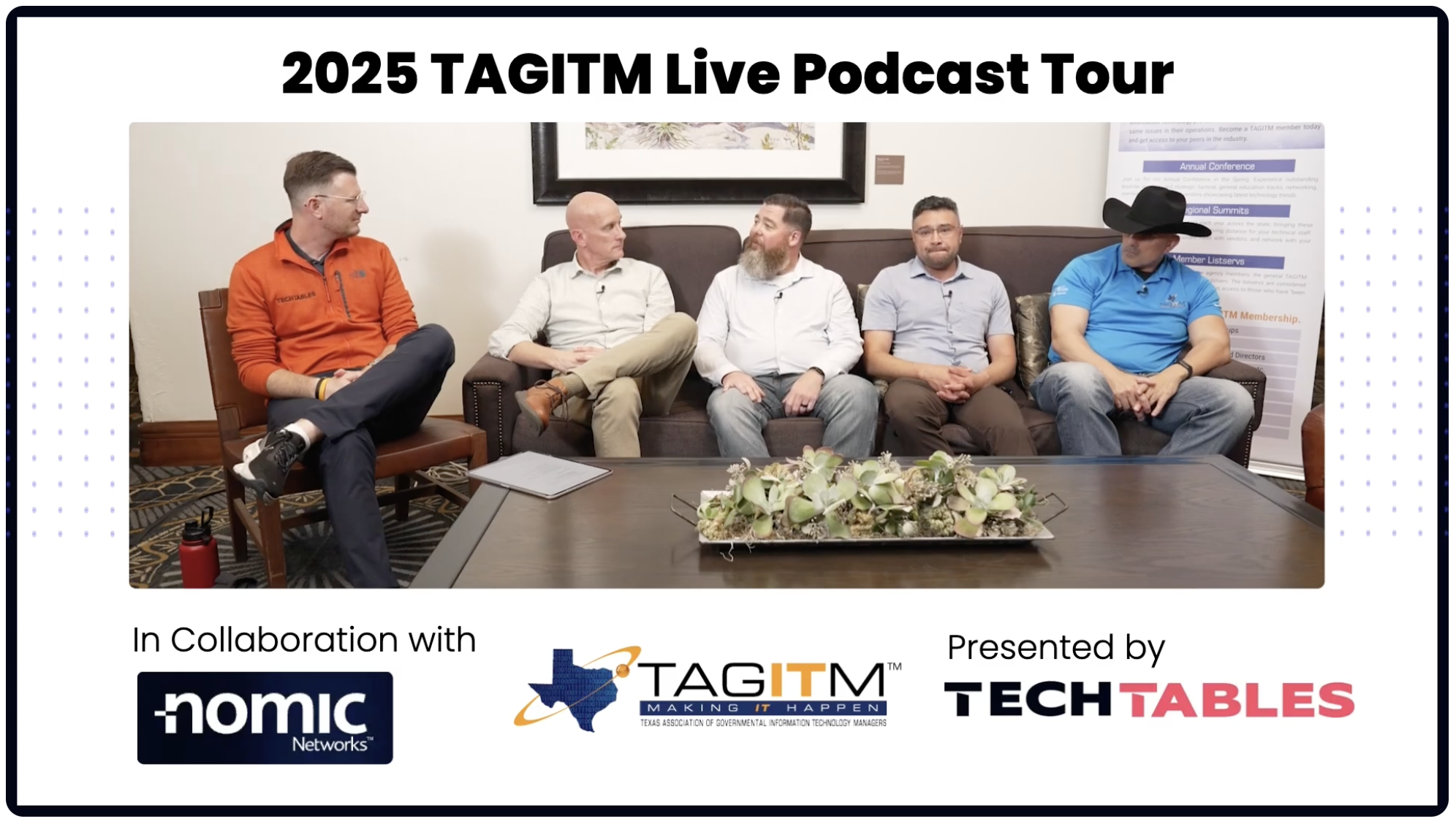
#### [#219: How Seguin IT Built a 27+ Award Culture — And What Port Houston & Flower Mound Teach About Leadership](https://techtables.com/podcast/219-how-seguin-it-built-a-27-plus-award-culture)
[](https://techtables.com/podcast/215-capmetro-built-ai-so-human-callers-cant-tell-how-austin-put-data-stewardship-before-ai-hype-utsas-humble-hungry-kind-culture-all-with-limited-resources)
[2025 TAGITM Live Podcast Tour](https://techtables.com/podcast/tag/2025-tagitm-live-podcast-tour)
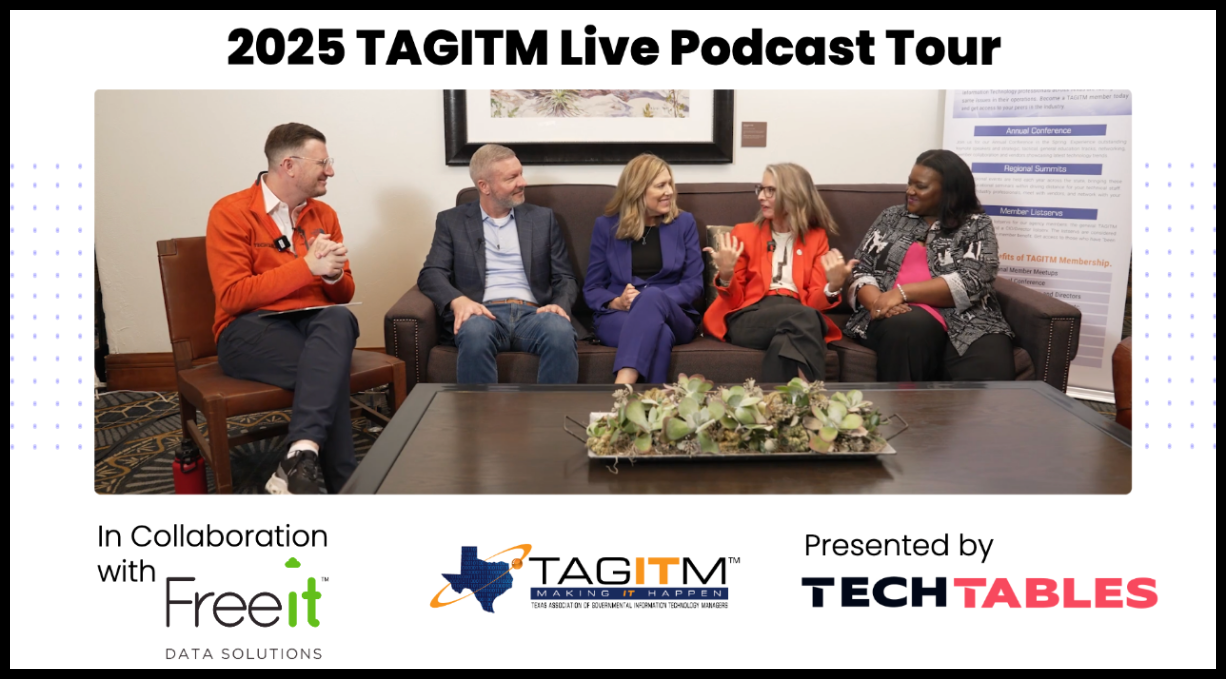
#### [#215: CapMetro Built AI So Human Callers Can’t Tell + How Austin Put Data Stewardship Before AI Hype + UTSA’s “Humble, Hungry, Kind” Culture — All With Limited Resources](https://techtables.com/podcast/215-capmetro-built-ai-so-human-callers-cant-tell-how-austin-put-data-stewardship-before-ai-hype-utsas-humble-hungry-kind-culture-all-with-limited-resources)
[](https://techtables.com/podcast/234-you-cant-turn-off-911-while-you-modernize-it-and-you-cant-close-an-airport-either)
[TT CIO Communities for Local Government](https://techtables.com/podcast/tag/tt-cio-communities-for-local-government)
#### [#234: You Can't Turn Off 911 While You Modernize It - And You Can't Close an Airport Either](https://techtables.com/podcast/234-you-cant-turn-off-911-while-you-modernize-it-and-you-cant-close-an-airport-either)
[](https://www.techtables.com/)
### The #1 Video Podcast for Senior Public Sector Leaders
Join 250K+ Public Sector Leaders—from State and Local Government to Higher Education—including CIOs, CISOs, City Managers, and Executive Directors—by subscribing to exclusive podcasts, live events, and invites to private meetups and more!
[linkedin-in icon](https://www.linkedin.com/in/jtoste/) [twitter icon](https://twitter.com/thejoetoste) [Follow us on Facebook](https://www.youtube.com/@techtables/) [Follow us on Facebook](mailto:joe@techtables.com)
```json
{
"@context" : "https://schema.org",
"@type" : "BlogPosting",
"author" : {
"@type" : "Person",
"name" : "Joe Toste",
"url" : "https://techtables.com/podcast/author/joe-toste"
},
"dateModified" : "2026-06-21T23:32:45.603Z",
"datePublished" : "2025-08-27T05:20:10.000Z",
"headline" : "#217: Supercharging Cyber Resiliency — How Texas Cities Achieve Enterprise-Level Security",
"image" : [ "https://techtables.com/hubfs/Screenshot%202025-08-26%20at%2010.19.24%20PM.png" ],
"mainEntityOfPage" : {
"@id" : "https://techtables.com/podcast/217-supercharging-cyber-resiliency-how-texas-cities-achieve-enterprise-level-security",
"@type" : "WebPage"
},
"publisher" : {
"@type" : "Organization",
"logo" : {
"@type" : "ImageObject",
"url" : "https://techtables.com/hubfs/TechTables%20Black%20&%20Red%20Logo%202023-1.svg"
},
"name" : "Levity Media LLC"
}
}
```