---
title: "#224: UCLA, Vanderbilt & Ericsson on 5G vs Wi-Fi on Campus"
description: "EDUCAUSE: UCLA, Vanderbilt & Ericsson on how 5G and Wi-Fi are reshaping campus connectivity and what modern network design really takes in higher education"
image: https://techtables.com/hubfs/Final%20Podcast%20Cover%20Art%20-%20EP%20224.png
---
[Skip to content](https://techtables.com/podcast/224-ucla-vanderbilt-ericsson-on-5g-vs-wi-fi-on-campus#main-content)
[All posts](https://techtables.com/podcast/all)
March 6, 2026
# #224: UCLA, Vanderbilt & Ericsson on 5G vs Wi-Fi on Campus
 Joe Toste · 22 minute read
[mailto:email@email.com](mailto:email@email.com)
### 📬 **The TechTables Newsletter**
TechTables connects public sector technology leaders — CIOs, CISOs, and CTOs — through darn good conversations and peer-driven community. The best place to start is the newsletter.
**Subscribe now.👇**
### **Episode Summary**
In this episode we explore how 5G and Wi-Fi are reshaping connectivity in higher education, the future of campus infrastructure, and how public sector technology leaders are thinking about network design, digital experiences, and modernization.
### **Featuring**
[Joe Way](https://www.linkedin.com/in/josiahway/), Executive Director of Digital Spaces, UCLA and co-founder, HETMA
[BC Hatchett](https://www.linkedin.com/in/bc-hatchett-88746312/), Director of Classroom Technology, Vanderbilt University and co-founder, HETMA
[Ben Moebes](https://www.linkedin.com/in/moebes/), Director of Public Sector, Ericsson
### **Timestamps**
([1:00](https://www.youtube.com/watch?v=c6IkNGF73UA&t=60s)) Why 5G isn’t replacing wifi- it’s filling the places wifi was never designed to reach
([4:15](https://www.youtube.com/watch?v=c6IkNGF73UA&t=255s)) Vanderbilt’s satellite campus challenge- same experience, 2,000 miles away
([9:00](https://www.youtube.com/watch?v=c6IkNGF73UA&t=540s)) Joe Way's take- and why he actually makes the case FOR college
([11:30](https://www.youtube.com/watch?v=c6IkNGF73UA&t=690s)) The day in the life of a UCLA student- and how it became the AI blueprint
([13:30](https://www.youtube.com/watch?v=c6IkNGF73UA&t=810s)) Faculty as catalysts, not content deliverers
([17:15](https://www.youtube.com/watch?v=c6IkNGF73UA&t=1035s)) One cable, one button- and why that’s worth millions in tuition dollars
([19:30](https://www.youtube.com/watch?v=c6IkNGF73UA&t=1170s)) The blue light problem nobody talks about- 20 to 60% may not be working
([22:00](https://www.youtube.com/watch?v=c6IkNGF73UA&t=1320s)) Why you can’t have someone watching every camera- and what AI does instead
([27:00](https://www.youtube.com/watch?v=c6IkNGF73UA&t=1620s)) UCLA, the Olympic Village, and why connectivity thinking can’t stop at the classroom
Whenever you’re ready, there are 3 ways you can connect with TechTables:
#### **1. 📬 The TechTables Newsletter**
Thanks for reading TechTables! Get early access to new episodes, insights, upcoming events, and more — straight to your inbox.
Join now: [https://www.techtables.com/](https://www.techtables.com/)
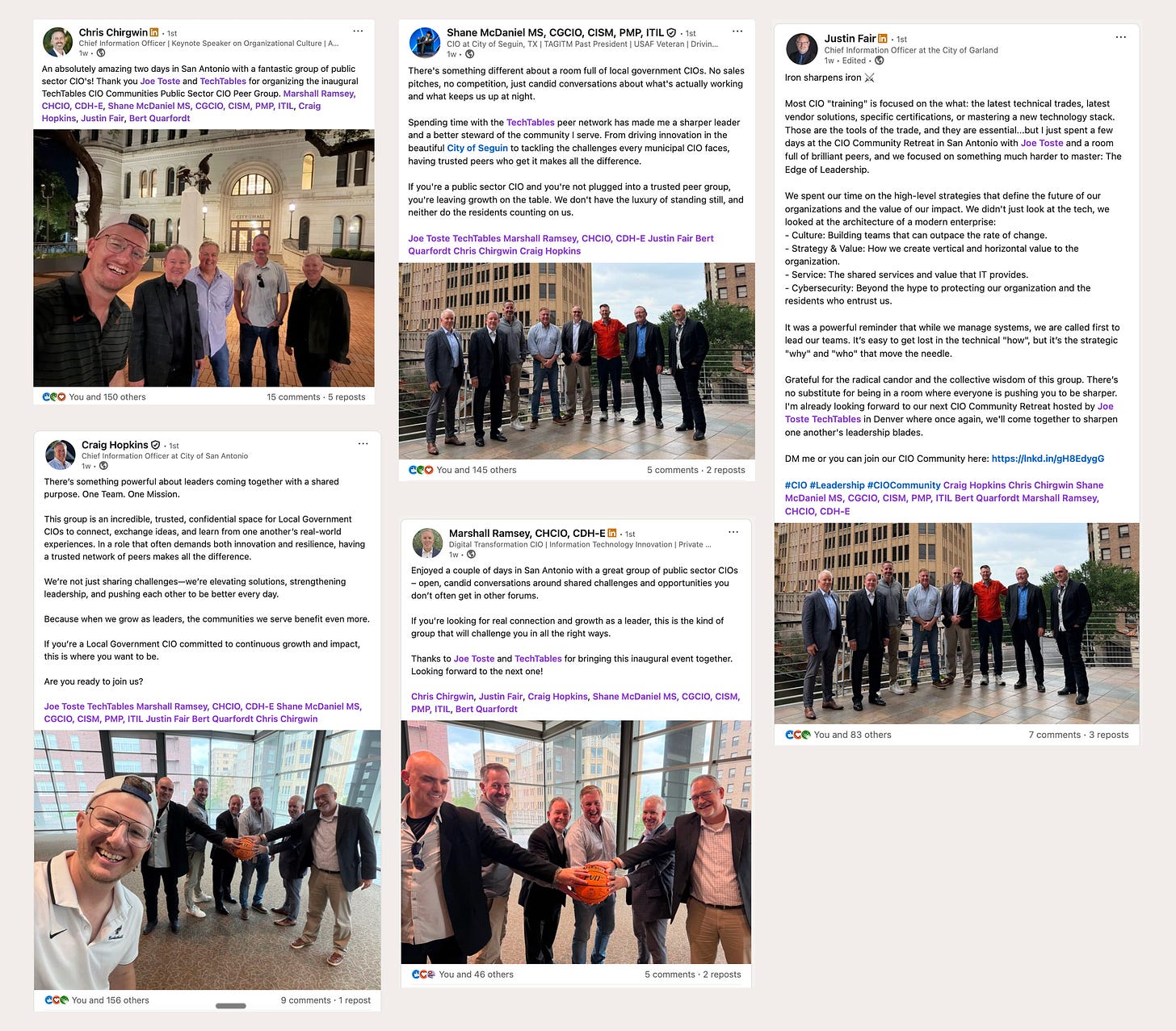
2\. 🤝 Are you a local government CIO who wants to become a better leader?
Check out our high-trust, vendor-free peer group built for local government CIOs tackling real challenges, honest conversations, and an authentic desire to become a better leader — our next retreat is November 2026!
Learn more → [https://techtables.com/communities-local-government](https://techtables.com/communities-local-government)
### 3. 🤝 The Better Together Series (Virtual & On-Site)
The narrative-driven series bringing together industry partners and public sector CXOs. Discover the compelling stories that unfold when we stop working in silos and start building together.
»»» Email [joe@techtables.com](mailto:joe@techtables.com) to learn more.
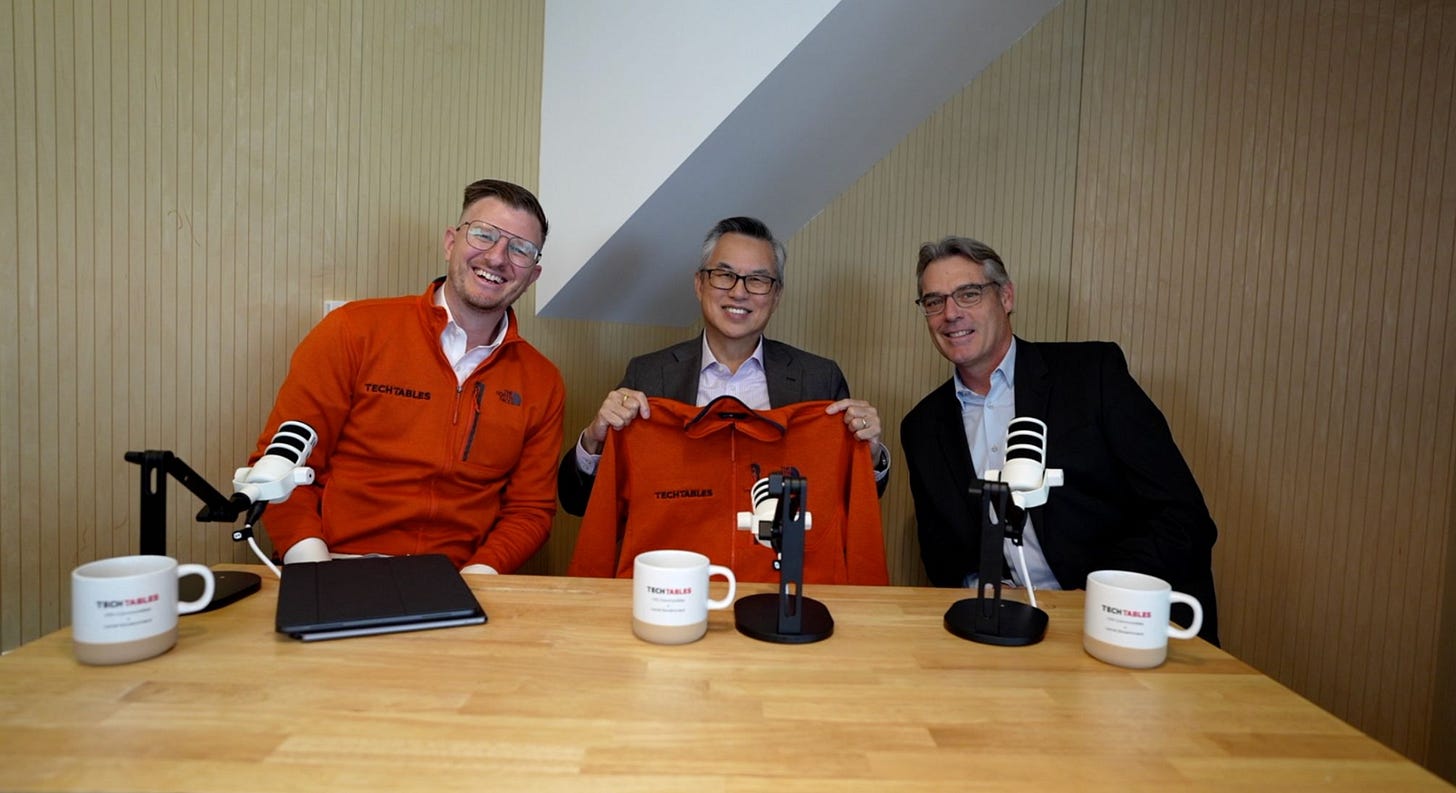
> TechTables Better Together On-Site with Peter Loo, CIO, LA County & Hannes Scheidegger, Chief Global Delivery Officer at Info-Tech Research Group
### Platinum Newsletter Sponsor:

Join TechTables & Info-Tech Research Group at [**Info-Tech LIVE 2026 - New Orleans**](https://preview.convertkit-mail2.com/click/dpheh0hzhm/aHR0cHM6Ly93d3cuaW5mb3RlY2guY29tL2V2ZW50cy9uZXctb3JsZWFucy1saXZl) (February 3 - 4, 2026) and/or [**Info-Tech LIVE 2026 - Las Vegas**](https://preview.convertkit-mail2.com/click/dpheh0hzhm/aHR0cHM6Ly93d3cuaW5mb3RlY2guY29tL2V2ZW50cy9sYXMtdmVnYXMtbGl2ZQ==) (June 9 - 11, 2026)!
Learn more about upcoming Info-Tech events here: [**https://www.infotech.com/events**](https://preview.convertkit-mail2.com/click/dpheh0hzhm/aHR0cHM6Ly93d3cuaW5mb3RlY2guY29tL2V2ZW50cw==)
### Gold Newsletter Sponsor:
****
> **[SentinelOne](https://assets.sentinelone.com/ghe/sentinelone-empowers)**—Learn how SentinelOne empowers this state to stay secure.
>
> **[Verizon Frontline](https://www.verizon.com/business/solutions/public-sector/public-safety/)**[—](https://www.verizon.com/business/solutions/public-sector/public-safety/)The advanced network that keeps first responders connected when it matters most.
>
> **[Carahsoft](https://www.carahsoft.com/)**—The Trusted Public Sector IT Solutions Provider™, supports government agencies and education/healthcare markets. Contact your Carahsoft rep today to access special discount pricing exclusively through the TechTables + Carahsoft partnership!
#### **Transcript**
Joe Toste: \[00:00:00\] Welcome to the Public Sector Show by TechTables. Super excited to have you all on, and Joe Way is a returning guest again.
Joe Way: It's good to be back. It's like deja vu.
Joe Toste: I know. I love it. I absolutely love it. Let's start down here 'cause we've got the hometown...
BC Hatchett: It's just a tiny little town.
Tiny little town.
Joe Toste: Tiny little town.
BC Hatchett: Tiny. They do a few music things here every now and again.
Joe Toste: BC give us a quick intro.
BC Hatchett: My name is BC Hatchett. I'm the Director of Classroom Technology for Vanderbilt University. \[00:01:00\] Also the co-founder of HETMA, the Higher Education Technology Managers Alliance.
We manage all of the classroom and learning spaces on the campus except for a few carve outs. And we strive to provide the best possible support for our students and faculty so that they have the best possible experience and outcomes in their learning environments.
Joe Toste: Tell us a little bit more about HETMA.
BC Hatchett: So we are the advocacy organization for the higher ed AV vertical. Higher ed AV is a massive industry and we wanna make sure that technology managers, and when I say technology managers, I don't mean people that are managers of an organization, managers of technology itself.
We wanna make sure that their voices are heard in the industry and their needs are being met by suppliers and manufacturers and other partners. So that they can take those solutions back to their campuses and implement 'em so their faculty, and like I said, their faculty and students can have the best outcomes.
Joe Toste: Ben.
Ben Moebes: Ben Moebes with Ericsson a lot of people would notice us as Cradlepoint from on campus networks. I've been in this sector for about 30 years now, which kind of crazy to hear myself say that I don't feel that old. But it's been a an interesting time working with schools \[00:02:00\] both K-12 and Higher Ed.
On technology and helping bring connectivity to students. I did a lot of the first wifi networks across many campuses way back in the day. And now we're doing a lot more of bringing in 5G and other technologies to help basically implement newer forms of connectivity where and when needed across campuses.
Joe Toste: Joe.
Joe Way: Joe Way, Executive Director of Digital Spaces at UCLA great title tells you nothing about what I do. So I, I oversee all the different AV verticals across our enterprise that would be our, our traditional classroom support, but our executive conference room, digital signage, live events, security.
I'm sure there's other areas, our live streaming service, et cetera, and all of our production. So all those different verticals pour up through me. And then as well, I'm the other co-founder of HETMA, the Higher Education Technology Managers Alliance. And it's good to be here and and be at EDUCAUSE
Joe Toste: Shameless plug. We've done a virtual episode. We did an episode at USC when you were there. We did one here last \[00:03:00\] year. We'll plug all those in the show notes and we will also plug HETMA in the show notes too, link back to that.
I think I got this Vanderbilt for 20 years. Woo. That's pretty incredible. Did you first, did you picture that you would be at Vanderbilt for 20 years?
BC Hatchett: Man, AV wasn't even on my roadmap when I graduated college. I used to work in broadcasting. Okay. I was a production manager and that.
That 24 7, 360 vibe grind was rough. Was very rough. And an opportunity came available at Vanderbilt and I just threw my hat in the ring and it hit. And I was like I'll do this a little while and see where I go from here. But I honestly fell in love with working in higher ed and decided to make that, my career.
Joe Toste: When we met on our intro call, we talked about, you were telling me about the satellite campuses. Yes. Are a big one. I just had. Dr. Vanessa Keenan on, and Tanya Bennett, she, so Vanessa's at UTSA, university of Texas, San Antonio, Tanya's at UPenn, and I was like, no. Guess what I've got.
Because we were talking about satellite campuses and I was like, I got BC Hatchet from Vanderbilt. He's coming out next. Talk about, we've got New York, West Palm Beach, \[00:04:00\] San Francisco, and you wanna deliver that Vanderbilt experience? Yes. 2000 miles away. Yeah. Walk us through that vision. How are you seeing that?
BC Hatchett: Yeah, so that's where our goal is. It's, they're not just satellite campuses. They're gonna be like a fully a piece of the Vanderbilt ecosphere, right? They're gonna have their own vibe, their own lifeblood, but we're trying to figure out how do we support that 2000 miles away. But we wanna replicate the experience that our faculty have on campus.
So we're looking at solutions and ways to manage it remotely in Nashville, but they can have that still that same outstanding experience no matter what city they're teaching out of.
Joe Toste: Yeah. That's great. Just a short follow up, being in higher ed for 20 years, what have you seen that you're like, Hey, I just don't think that works.
I think this works over here as you're starting to craft what the vision of this looks like.
BC Hatchett: I've seen a massive evolution in content delivery in the way that teaching is delivered. We had the we're where Vanderbilt is primarily a, a residential learning environment, like we want all of our students on campus to be able to learn, interact with each other, grow with each other, that's how we \[00:05:00\] deliver instruction.
But also, with since 2020, we've seen a huge amount of video come in. And it's not just folks teaching remotely. It's bringing in subject matter experts and content experts into the classroom from wherever they are. The logistics for that have been completely decimated because one zoom call or one teams call, and you can have.
Whoever is an expert in whatever engineering field or medical field, come into the classroom for a session and teach those students without ever having to leave wherever they're from. It just makes, it just drops those barriers of content delivery.
Joe Toste: Ben, let's jump over to you. You mentioned it, you've been working with K 12, higher education on mobile learning environments, connectivity beyond the traditional campuses. We've got school buses. I was reading satellite campuses, Ericsson Powers, 60%.
Tell me if I lied on that 60% of 5G calls in the US and you're trying to help universities think about connectivity in completely different ways. Walk us through how you think 5G is transforming that concept of learning.
Ben Moebes: Yeah, so I mean it is about connectivity. \[00:06:00\] Ultimately, most people, especially at the end user side, they don't really care how they're connected.
They just need to be connected. They need to be connected in a secure way so they're not bringing on viruses and other things that can harm their own device and the network in general. They just want it to work right. And so 5G is a little different from wifi in that, wifi was a solution that we had to have because data connectivity over cellular didn't exist 20 years ago.
We get comfortable with this idea of pulling out our phone and being able to go on Google and search and look at videos, et cetera and. Maybe 15 years ago, even, 10, it was difficult. But when we were doing this 15, 20 years ago it was the only way to bring connectivity was wifi.
As cellular data became more prevalent and we started being able to bring cellular to a user more inside the campus we started seeing some differences. Wifi can be challenging at times from coverage inside of new buildings or even an older structure. Cellular technology in general penetrates \[00:07:00\] and brings connectivity across a broader spectrum than wifi sometimes.
So we, we have this new dynamic where kids are bringing in devices that are cellular connected and wanting to get them on the wifi network. And for the first time, we're actually struggling with making something that was the only way to connect devices work 20 years ago. Keep up with the prevalence of cellular.
And so we're starting to get to this inflection point where it's why don't I just bring cellular everywhere? If the, if kids are bringing these devices onto the campus today and expecting it to work like it works outside or where they're in their home I now have to think differently about how I construct that inside of a learning institution.
But it's that this seamless connectivity. That we are used to with our phones. It just, you bring it outta your pocket, it just works. I want that with my laptop. I wanna be able to be on campus and have it work inside my classroom, go into my dorm room and have it work, take it to a coffee shop off campus and have it work in \[00:08:00\] the same exact way.
And not have to decide, oh wait, I'm in a public hotspot. Should I turn on a VPN for connectivity? To be secure. Or now I'm in a train station, should I worry about this? It just should work everywhere seamlessly. And so that's the expectation now that kids are bringing to a campus network.
And so we're trying to help provide that for our campus customers.
Joe Toste: It's like that explosion of IOT and every device is connected to something and yeah, connectivity. I was driving all through Southern Tennessee leading up to this and. I needed to stay connected, let me tell you.
Joe, I want to jump back over here. You wrote an article in Forbes recently. Maybe it was like 12 hours ago. I don't know. It was published 12 hours ago, right? In my LinkedIn feed. I was like and open. So you wrote about when classrooms think and how AI is shifting higher ed's value prop from information delivery to synthesis and application.
Walk us through how you're seeing that vision play out at UCLA.
Joe Way: Yeah. No, great question. And I want to go, I'm gonna bounce it off of something Ben said. \[00:09:00\] 'cause I, it was wise which is why you're also a global leader here and what y'all do. One of the things we're talking about, the student experience isn't just about being connected, but it's about bringing learning to where they are, how they are, and how they live.
Because we're not just a classroom of four walls anymore and a projector sitting up on a screen. This is really a cultural environment. I got into here into Nashville early this week and got to go to my first SEC football game, and I'm there and the students rent. There is not a single one that's not sitting there on a phone trying to live stream, trying to, Snapchat, whatever is going on.
And now we also have to bring that to the educational experience, right? And so what we're doing at UCLA is saying, okay, how can we leverage AI and how can we use it to make sure that we can cater all experiences to them directly? 'cause one thing that AI does extremely well, it's a great translator, it's a great aggregator of experience.
And so we're trying to take that and say, look, the \[00:10:00\] classroom doesn't just need to be come in and talking ahead anymore. We can actually allow allow all of our tools to work together from our LMS systems, to our classroom technologies, to smart buildings. We can actually make sure that we're more sustainable, that we're actually bringing digital equity to our students and allowing that to be a translator for us.
And that's why we're trying to move all of our technologies to cloud-based services, right? We want to be able to say, look, the one thing that a student wants and needs. Is, and we're in beautiful Los Angeles, right? And you're in Beverly Hills, guess where they want to study out in the lawn, right?
That's where they want to be. Guess what I, it can't just think about wifi and connectivity in a building, it's easy to do there. Not necessarily in all of the hills, right? And so we want to make sure that all the tools are there in their hands, in their laptops so that they can create that experience and that goes all the way into the dorm experience.
One of the nice things about my role. Is I cater to the entire experience \[00:11:00\] of a day we ended up going through. And I think I'm jumping ahead to one of your questions, but That's okay. I will steal the show. I have no problem doing that. No. Because what we did, we actually looked at the day in the life of a student instead of saying, okay, here's the classroom.
No, they actually, they wake up, they, they want to order their coffee. They maybe have to do some way finding, they're gonna go to Poly Pavilion at night and watch a basketball game. They're gonna go to the student health center, they're gonna meet people at a group study space, they're gonna head to a library.
They might meet up, go to a faculty center to meet with a, a faculty member for lunch. We're in Hollywood. They might go out, and hit the clubs, and then come back and get stopped by security on the way back in hit their fraternity stories we're looking at this and we went, we started going, okay, how many campus systems do they interact with in a day of a life?
And we just kept running outta space, and I think when you're here, look at Edika and you're looking at the show floor with all of these booths, right? Students interact with every single one of these booths every single day, right? And that's how we're leveraging \[00:12:00\] ai. And I took your very short question and turned it into a very long answer.
Joe Toste: How is UCLA thinking about that broadly as far as hey, we want to keep bringing everyone along.
Joe Way: Great question. I believe we have a responsibility as an R-1 institution to bring that, we actually offer OpenAI subscriptions to every student, right?
We allow them to be able to have the, so now obviously not everybody is going to have the 17 Pro Max. Not everybody is gonna have the new iPad, but surprisingly, we do find that smartphones are the one things that students will not live without, right? That are, and, but we also offer services, our laptop checkout services, for example, leveraging, moving our.
Our libraries and the old desktop, computers there to do work and go, let's put, mobile devices in their hands so they can do this. And then let's make sure all the tools they need, open AI or, Gemini. I think we do with that as well. And make sure that is there for them and they have that opportunity.
And the flip side of that too is now working with our Teaching and Learning Center to say, \[00:13:00\] now you also have to work with the faculty. To allow them to, allow the students to leverage these tools. And I know this is a sticky topic and you ask 10 different faculty of what they think about AI and you're gonna get 20 different answers, right?
But what we wanna say is, look it's not going anywhere. We have a responsibility. How can we work with you so that, rather than not worrying whether or not AI's gonna write their paper, make them. Them write five different papers using AI and have, and figure out the syn, the as going to my article, the synthesis between those things.
And now that's real learning, right? Yeah. And but again, it's adapting the way the methodologies and creating those atmospheres and making it easy for faculty to do
Joe Toste: the last thing before I moved to BC because I know he just took over the show. No, it's fine. It's
BC Hatchett: fine.
Joe Toste: In your Forbes article you had mentioned,
Joe Way: you said, go to BC and then I wasn't paying attention. Okay.
Joe Toste: In basketball, that's called a pump fake. And you jumped you talked about faculty needing to shift from content deliverers to catalysts of collaborative personal \[00:14:00\] experiences.
Talk a little bit more about that. Yeah. I'm gonna give you your hot take. Here, and I allude to this in the article as well. A four. There is nothing at a four year institution, at an undergraduate level that you cannot learn on YouTube, period. We at higher ed used to be the deliverers of content.
Joe Way: If you had to learn a skill or learn something, you had to go to college, right? 'cause you weren't, everything was in books, right? You had to be able to have that resource, you had to have the faculty members' knowledge. You don't need that anymore, right? If you, something breaks in your house, guess what you do?
You go on YouTube and all of a sudden you became a great plumber, right? Because that's exactly our life. So what we need to do now is recognize. That the information is free and out there. So what, how do we justify that tuition rate that people are paying? We are at, we now need to make them synthesizer and collaborators of that information, and allow them to be able to do that. And so that's why we're having to shift this. And that's where I think we have opportunities with ai, for example, but also with just adapting \[00:15:00\] pedagogies, right? And saying, look, maybe your class time isn't best used. Speaking at the students anymore, right? Just give them the resources on the LMS and say, have these ready before you show up.
Let's have group discussion. Let's have debate. Go find, use ai. Go find something. Google search, four different contradictory opinions about this topic, and let's debate that. That's where an R-1 institution can excel and have that, that value proposition that now is lost in not being the, givers of information.
Joe Toste: BC we'll jump back to you. Alright, you can now take a break.
Joe Way: I'm go, I'm waiting for the pump. Fake here again.
Joe Toste: So I think you told me there are nine different colleges at Vanderbilt. Is there one or two? Great use cases from one of those colleges where you created something that helped elevate the higher ed experience.
BC Hatchett: We've got, it's almost a small city, right? We've got a movie theater classroom for our cinema, media arts. We've got a trial, courtroom simulation space for \[00:16:00\] our law school. Those are specialized spaces, but I'd take a little more of a broad view, right?
We want to give them. Excellent exp experiences in all their spaces. And I go back to our partnerships we have with faculty. Like what we actively encourage them, tell us what's not working for you. What do you need to be successful? And I'm thinking of a, a space when I started doing this early on, where the faculty were just not happy.
This place, this space does not work for us. It's constantly broken and it was low hanging fruit, but once we got it fixed and got it right, they could not have been happier. And I was like, this is. While we do that, we want them to be able to not have technology as something that blocks them from being able to deliver instruction because it's not working or it's not working well to them.
Because, we're technologists. We understand how this stuff works. They wanna go in and teach. So how do you bridge those two things to make it almost a seamless experience for em?
Joe Toste: Yeah, when I when I got to visit I'm sorry, USC, it keeps coming up. It's just always gonna come.
Joe Way: You I am an SC alum. Yeah. It's okay. We could, I might get paid by the enemy, but,
Joe Toste: he gave us a \[00:17:00\] two hour tour. So this was like hands on. My daughter was with me. We're going into the classrooms when we're in the whole campus. If you were gonna pitch this.
To either new faculty or even some new students. Specifically on the education technology side, what would you be most proud to share?
BC Hatchett: I would say right now is our new initiative of simplifying how people connect to the equipment. So you would go into the old classrooms and you have five different cables and 20 different buttons you had to push to even connect something up.
We've worked pretty hard to simplify that down to just a connection. One single connect cable and one single button. So that way it, it cuts the faculty startup time to maybe a minute or two. So they just walk in, you're talking about a five, 10 minute changeover in class time. They walk in, plug in, hit a button, they're off and running at that point.
So we're, when you break it down to, time in a classroom that's real dollars. You could have hundreds of thousands to a million or something worth of tuition dollars sitting in a classroom at one moment. And if you're not delivering on the \[00:18:00\] instruction during that time that's lost time and lost dollars in the education side.
Joe Toste: Ben, so you've got the perspective of both the parent and kind of your current position right now. So let's talk about campus safety. That needs connectivity, right? The important piece. So as you're working across K-12, Higher Ed this could be mobile learning environments walk us through a really transformative either use case or story that really spoke to you.
Ben Moebes: It was interesting doing the college campus tours. I did it with my older kid who's a graduate now and then, the younger two that are seniors now. So a couple years ago, but not that far. One of the interesting things that I saw when we did the campus outdoor part of the tour was everybody talked about their blue lights and the safety across the campus of their network, and which makes you feel good as a parent, right?
I want to know that my daughter is gonna be safe at, midnight as she's walking back from ROTC to her dorm and which does happen, and that does make you feel good. But then on \[00:19:00\] my work side of the house, one of the things I see quite regularly is as we go and actually build these networks for blue lights, a lot of them don't work at any given period of time.
And it's scary, right? As the, again, the non-parent side of me who sees the, how often these don't work gets freaked out, right? Campuses are construction magnets. There's tons of buildings all the time being built. And the fiber networks are constantly, unfortunately getting trenched.
And so it's really hard to know when that old copper line, when, you know, a lot of those blue lights are running on pots lines plain old telephone service. And if they get trenched or the fiber that's running it back to a zip line somewhere gets trenched, oftentimes you don't know. ' cause the light itself might be running power off of a different source.
So the blue. Light that's on might be working, but the phone line that supplies it is down. And I've seen campuses that have anywhere from 20 to 60% of their network, of their blue lights not working \[00:20:00\] at any given time. And so the liability to the campus is massive. If they have a student who needs to press that button and can't and just the danger to the student is high, right?
Because they're expecting it to work. And then, so if it wasn't there, it'd be a little different. Maybe I'd have my phone out at all times ready to press a button. That worries me. And so having other ways to bring connectivity to, IOT sources, whether it's cameras located in less trafficked parts of the campus and blue lights that I know are gonna work that is important to me as a parent, right?
And as well as just connectivity, like we've already talked about, to student access across campus. So safety on the campus itself. University of Georgia had a very unfortunate situation about a year ago, which is highly publicized. And so they've added a massive amount of both video surveillance as well as an increased number of blue lights around campus to help protect students.
That. Made me wake up a lot more, with having kids on \[00:21:00\] campus at the same time and knowing what we can do, right? We can provide connectivity anywhere on that campus. We can provide security from a remote surveillance and then using AI to, to run analytics on those cameras so that you can't have somebody watching every camera across campus at all time.
But you can have analytics systems behind the scenes. Saying, okay, there shouldn't be a person in that zone right now. There, shouldn't be someone laying down in that corner. Maybe it's a student who's passed out from having too much fun. That happens, right? So I went on analytics engine to be able to say somebody needs to go check that out and and get over to them rapidly, that's what we can do.
And so I'd love seeing that when we enable those technologies on campuses.
Joe Toste: And there's a lot of great crossovers I normally interview. A lot of CIOs and CISOs and folks like that. And one of the, one of the recent use cases I heard in the news was from Khaled Tawfik also past guest on the podcast, they there were a number of homeless camps and they actually ran \[00:22:00\] analytics and was using AI to identify.
When certain camps were just getting outta control and, what was going on, where to deploy resources. So like where should police go or maybe not police go. And which I think is like a really great really great use case. Especially the amount of data that you guys pick up across the entire portfolio is I'm sure.
A lot. So as we wrap up. I'd love to hear from the two of you guys, you have been on the podcast so many times. I look, I went on the Hema page and I dunno, you guys have been there like eight, eight or nine times. I'd love for you to take this over a little bit and hear from you.
And then we'll have, we're gonna have Ben chime in. Would've been some of the, I don't normally interview AV folks we do 'cause we got a relationship. I'd love to hear what are some of the best episodes and, and our, a lot of our listeners are our CIOs in public sector.
And so I think for them things they don't hear about often enough would be AV. GIS is probably another one. What are some of the top episodes that you've guys have seen?
BC Hatchett: Wow.
Joe Way: Episode one
BC Hatchett: one is always the most fun. That was probably the most fun \[00:23:00\] that I've had in a long time there.
Yeah, just trying to. A lot of the episodes, especially the ones that I've been on it, it's more conversational. Like we just talk and find a thread and pick that thread and see where it goes from there. That's a lot of what the first episode was. We, neither one of us really knew what we were doing and just started talking and it went from there.
Joe Way: Yeah. Yeah. I would I would agree. I think. Obviously there's the episode where your daughter makes a cameo. That was right. That was pretty cool. So there we go. That was pretty cool. No, it's interesting 'cause for those aren't familiar with my podcast hired av I just interview tech manager people, but it's not even necessarily the manager.
Sometimes it is, an executive level or sometimes it's the support desk person. And I think what always gets me. Is their story and how they got to where they are, where they want to go. One of my shtick is I don't script anything because I don't, I want them to tell their story and when they say something and I think it's interesting, I'm gonna go there.
And I would never know that just by looking at a LinkedIn page and oh, you've been here for eight years, blah, \[00:24:00\] blah, blah. Looks like he's right. And so I can get that organicness, and it's just I just love seeing life change, and like, how did you get, 'cause we all have a weird,
BC Hatchett: There's no bachelor of av, right?
You're not, nobody's going to school and say, Hey, I'm gonna have a bachelor's in av in, in what? Everybody has found their way to this industry in their own, their own unique journey. And it's always fun to hear I did X, Y, and Z for a while and then I took a job in this university.
'cause I, this sounded like a good idea at the time. And then they fell in love with it and they've continued to grow their career from that. So hearing how people made their journey into higher ed is always one of the most fun things.
Joe Toste: Yeah. And I would say probably now that I think about it in my home studio, I've got all kinds of AV related equipment.
I got the road caster, I've got the switchboard I've got. The video. See, and I'm so bad. I've had to, as I've running the business, I've had to somewhat remove myself from all of the, I used to geek out on this stuff, like the OG was back in the day. I'd go to Radio Shack,
BC Hatchett: oh,
Joe Toste: and
BC Hatchett: I miss Radio Shack.
Joe Toste: \[00:25:00\] I would be like reading manuals and talking to somebody. And then now it's a little bit different, but the good old days that, that was a lot of fun. And so I've, that's probably the closest resemblance I can have. The
Joe Way: real question is. Do you still have the box of miscellaneous adapters and cables somewhere in your garage as a just in case, right?
BC Hatchett: If you don't have it, do you truly work in tech? That is, that's a, that's right. Is that it?
Joe Toste: I think I went to a swap meet and dropped everything off. Yeah. Yeah.
BC Hatchett: I never have a mores higher sense of accomplishment than when I need something and I reach down into that box and I find it, and I'm like, yes, I'd saved this for 10 years and it paid off.
Joe Toste: In Southern California, there is not enough space to hold stuff for 10 years. Holds up for 10 years.
Ben, as we wrap up, what either insights or lessons or non-obvious, insights are you seeing across the portfolio right now at Ericsson?
Ben Moebes: Yeah, it's, it's a great time to, to work for a company like Erickson, right? 5G and just cellular connectivity as a whole across. Public sec, public sector, like police as well as we do a lot in the military. I also work in that sector. It's very interesting. Can't talk about \[00:26:00\] a lot of it, but it's really cool.
And it's, again, connectivity is everything across all of our worlds. Now, if you're not connected to something at all times, you feel naked and lost. And whether that's a good thing or not is a discussion maybe for another podcast. But it's the reality that we're in. And we bring connectivity and so it's a fun place to be.
Talking about, being this Hector for a long time, I had no idea when I was graduating from college that this is what I was gonna do. I thought I was gonna fly fighter planes and life took a different turn, right? And and I'm so happy that I'm here because it's, every day is different and fun and that.
A, a very lucky and incredible place to be.
Joe Toste: Yeah. We, the kind of premise for this episode was in the kind of higher education AV space. But there are great use cases across police first responders as far as con connectivity. It's just everything's connected these days.
Joe Way: You don't and that's it is you don't realize how much things are connected.
Until you're without it. \[00:27:00\] Like it, it's really cool projects we're doing, we are doing realtime safety center, we are supporting, for LA 28 for Olympic Village. And you just don't realize especially in our sector in higher ed, we're Ed. Cause we think about things in a classroom in sense.
From way finding digital signage, menu boards in the Starbucks to the, everything is so involved and and it's everywhere. And like you said, even your home studio, right? Yes. How about now that most of our people are remote, how many in probably BC did this too, how many times did you have to go to say your chancellor's house and set up zoom rooms for them?
Because guess what, where are they taking most of their meetings from now? And so now. Every space has had to become an interconnected space to the greater ecosystem that is the university. And and it's just it's amazing. It's great. It keeps us employed which is a great thing of how connected everything has to be, not just the four walls of a classroom.
Joe Toste: Have you gone to a Chancellor's house and set up a Zoom room? I have not \[00:28:00\] had to do that yet. Not yet.
That would be a great podcast episode, by the way. I think that would be, that'd be pretty good.
Joe Way: All right.
Joe Toste: Thank you for coming on the Public Sector Show by TechTables. I appreciate y'all.
Ben Moebes: Thank you. It was great.
Share: [facebook-f icon](http://www.facebook.com/share.php?u=https://techtables.com/podcast/224-ucla-vanderbilt-ericsson-on-5g-vs-wi-fi-on-campus) [linkedin-in icon](http://www.linkedin.com/shareArticle?mini=true&url=https://techtables.com/podcast/224-ucla-vanderbilt-ericsson-on-5g-vs-wi-fi-on-campus) [twitter icon](https://twitter.com/intent/tweet?url=https://techtables.com/podcast/224-ucla-vanderbilt-ericsson-on-5g-vs-wi-fi-on-campus) [envelope icon](mailto:?body=https://techtables.com/podcast/224-ucla-vanderbilt-ericsson-on-5g-vs-wi-fi-on-campus)
## Recommended Next Episodes
[](https://techtables.com/podcast/227-ucsb-virginia-tech-cisco-thousandeyes-on-leading-it-before-the-problems-find-you)
[2025 EDUCAUSE Live Podcast Tour](https://techtables.com/podcast/tag/2025-educause-live-podcast-tour)
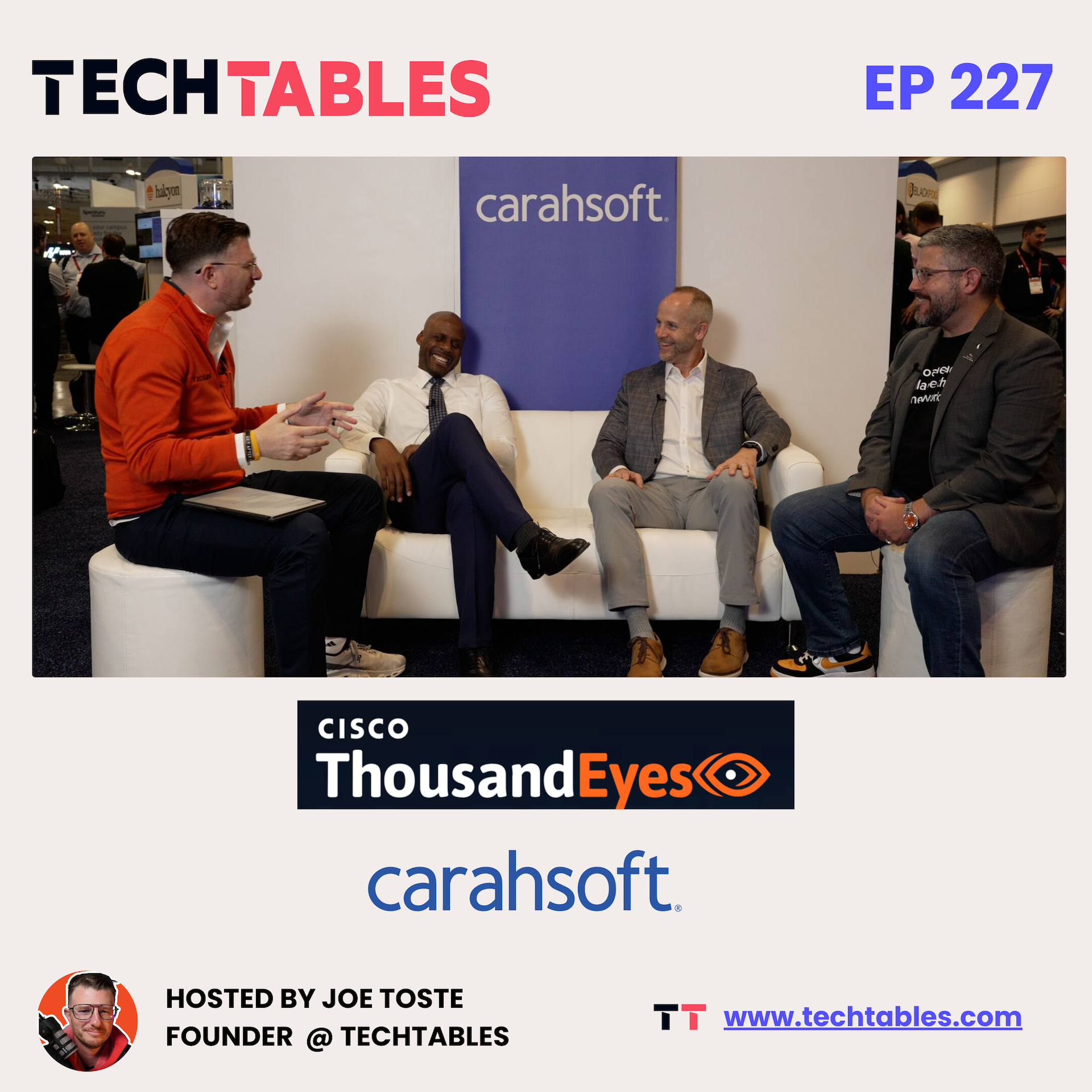
#### [#227: UCSB, Virginia Tech & Cisco ThousandEyes on Leading IT Before the Problems Find You](https://techtables.com/podcast/227-ucsb-virginia-tech-cisco-thousandeyes-on-leading-it-before-the-problems-find-you)
[](https://techtables.com/podcast/195-purdues-enterprise-ai-challenge-montanas-state-wide-cyber-hub)
[2024 EDUCAUSE Live Podcast Tour](https://techtables.com/podcast/tag/2024-educause-live-podcast-tour)
#### [#195: Purdue's Enterprise AI Challenge + Montana's State-Wide Cyber Hub](https://techtables.com/podcast/195-purdues-enterprise-ai-challenge-montanas-state-wide-cyber-hub)
[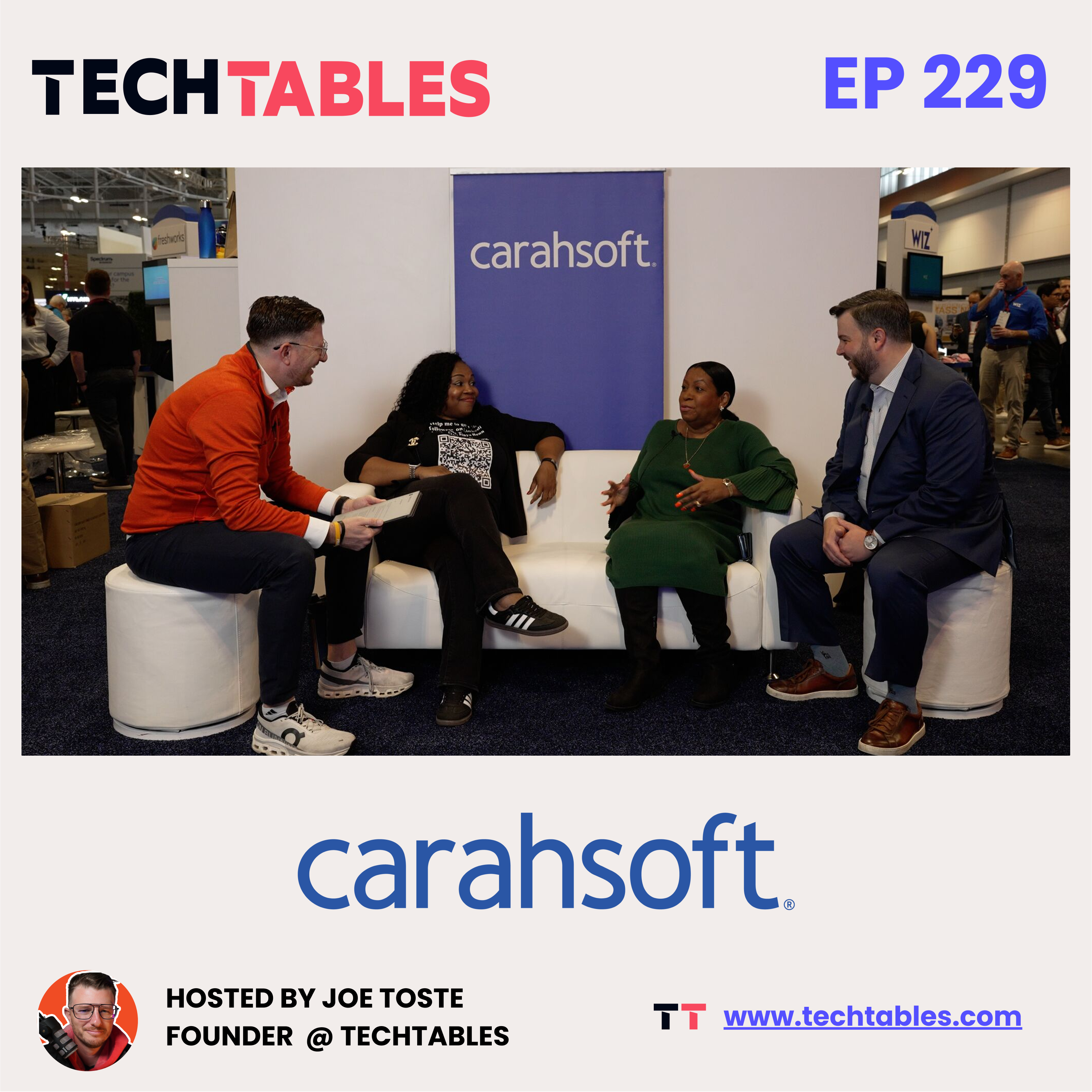](https://techtables.com/podcast/229-you-can-write-an-ai-policy-today.-the-feds-will-rewrite-it-tomorrow)
[2025 EDUCAUSE Live Podcast Tour](https://techtables.com/podcast/tag/2025-educause-live-podcast-tour)
#### [#229: You Can Write an AI Policy Today. The Feds Will Rewrite It Tomorrow.](https://techtables.com/podcast/229-you-can-write-an-ai-policy-today.-the-feds-will-rewrite-it-tomorrow)
[](https://www.techtables.com/)
### The #1 Video Podcast for Senior Public Sector Leaders
Join 250K+ Public Sector Leaders—from State and Local Government to Higher Education—including CIOs, CISOs, City Managers, and Executive Directors—by subscribing to exclusive podcasts, live events, and invites to private meetups and more!
[linkedin-in icon](https://www.linkedin.com/in/jtoste/) [twitter icon](https://twitter.com/thejoetoste) [Follow us on Facebook](https://www.youtube.com/@techtables/) [Follow us on Facebook](mailto:joe@techtables.com)
```json
{
"@context" : "https://schema.org",
"@type" : "BlogPosting",
"author" : {
"@type" : "Person",
"name" : "Joe Toste",
"url" : "https://techtables.com/podcast/author/joe-toste"
},
"dateModified" : "2026-06-21T23:27:01.874Z",
"datePublished" : "2026-03-06T13:15:00.000Z",
"headline" : "#224: UCLA, Vanderbilt & Ericsson on 5G vs Wi-Fi on Campus",
"image" : [ "https://techtables.com/hubfs/Final%20Podcast%20Cover%20Art%20-%20EP%20224.png" ],
"mainEntityOfPage" : {
"@id" : "https://techtables.com/podcast/224-ucla-vanderbilt-ericsson-on-5g-vs-wi-fi-on-campus",
"@type" : "WebPage"
},
"publisher" : {
"@type" : "Organization",
"logo" : {
"@type" : "ImageObject",
"url" : "https://techtables.com/hubfs/TechTables%20Black%20&%20Red%20Logo%202023-1.svg"
},
"name" : "Levity Media LLC"
}
}
```